
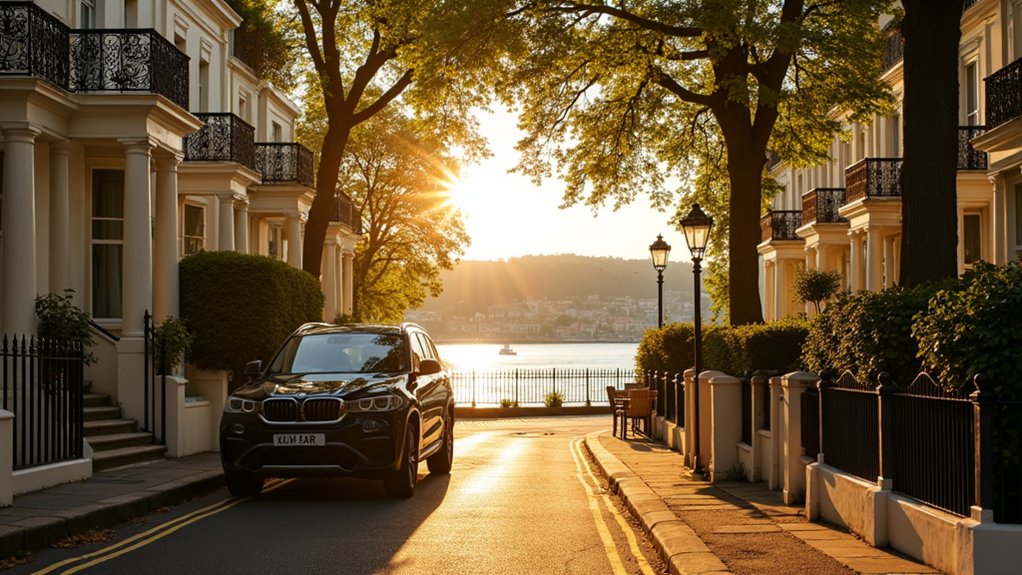

If you’re weighing Richmond for a prime purchase or sale in 2026, you’re paying for scarcity as much as square footage. River frontage, Richmond Park adjacency, and top school catchments keep demand resilient and rental yields competitive, but pricing varies sharply by micro-street, view line, and walk-to-town time. You’ll want to know where premiums are justified, which homes move fastest, and what could cap upside next…
Key Takeaways
- 2026 Richmond luxury homes cluster at £1.8–£2.6m, £2.6–£4.0m, and £4.0–£7.5m+, typically £1,150–£1,600 per sq ft.
- Demand concentrates in riverside and green-space micro-locations: Petersham, Richmond Hill, St Margarets “Golden Triangle,” and select pockets of Kew and Sheen.
- Proximity to top primary and secondary schools reduces days-on-market and supports prices through softer cycles.
- Buyers prioritise turnkey condition, two reception rooms, a home office, gardens, and documented upgrades that protect resale value.
- Scarcity assets—Thames views/frontage and Richmond Park edges—command premiums and stronger rental performance, though rate and policy shifts pose 2026–27 risks.
How Much Do Richmond Luxury Homes Cost in 2026?
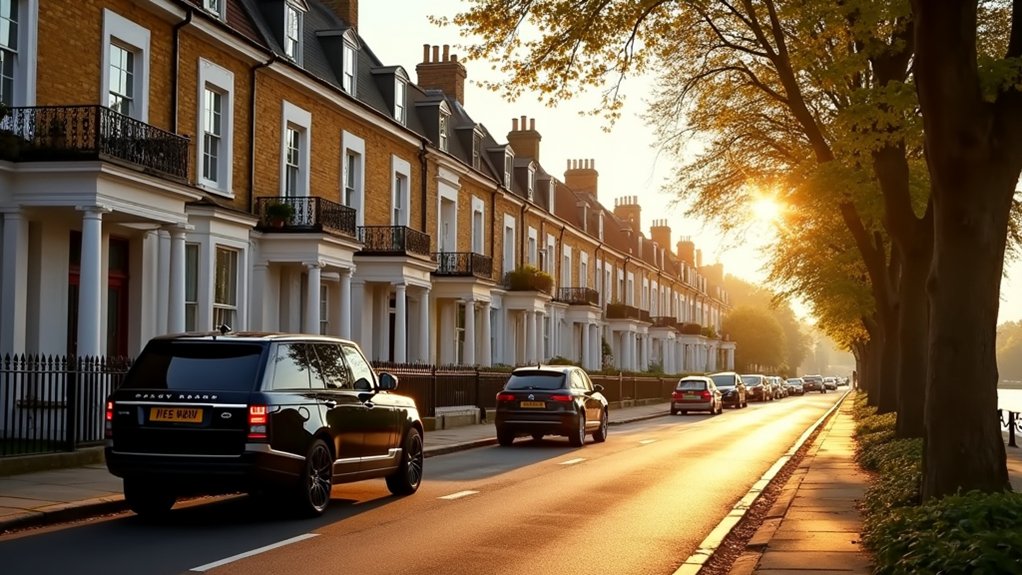
While Richmond’s prime market moves with interest rates and limited riverside stock, 2026 luxury pricing still clusters into clear bands: expect £1.8–£2.6m for top-spec 3–4 bed houses, £2.6–£4.0m for larger family homes, and £4.0–£7.5m+ for turnkey trophy listings.
You’ll typically pay £1,150–£1,600 per sq ft, with best-in-class finishes pushing higher.
For ROI, prioritize layouts you can rent fast: 2 reception rooms, office, and garden.
Budget 8–12% of purchase price for upgrades; Luxury interior design tends to recoup more than niche bespoke features.
If you buy period stock, ring-fence costs for historic property preservation, approvals, and ongoing maintenance.
Which Richmond Neighbourhoods Command the Highest Premiums?
Because supply is tightest where buyers want it most, Richmond’s highest premiums cluster around river frontage, immediate park access, and walkable stations. So you’ll typically see the sharpest £/sq ft uplift in Petersham (riverside/heritage feel), Richmond Hill & the Terrace (views plus cachet), the St Margarets “Golden Triangle” (fast commute premium), and the best pockets of Kew and Sheen near the green spaces and top schools.
If you’re buying for ROI, treat these as “liquidity zones” where turnkey finish and parking convert fastest and price softening tends to be shallower than in outer, less connected streets.
To underwrite value, benchmark against recent solds within 300–500m of stations/park gates and discount anything on busy cut-throughs.
A Luxury estate agent will flag micro-streets where Historic architecture drives scarcity and insulates downside.
What Types of Richmond Luxury Homes Sell Fastest?
When you track days-on-market in Richmond’s prime streets, a clear pattern shows up: turnkey, low-friction homes that minimise renovation risk and maximise lifestyle convenience sell first and hold price best.
You’ll see the fastest exits in houses with validated recent refurbishments, clean surveys, and compliant electrics, plumbing, and EPC improvements—buyers price uncertainty hard. Period architectural styles that retain original proportions yet add modern layouts also move quickly, because they protect resale liquidity.
On the numbers, homes that present “finish-ready” typically reduce negotiation drag and cut marketing time, improving your annualised ROI.
Prioritise luxury home amenities that are measurable value drivers: off-street parking, strong broadband infrastructure, secure gated access, and efficient heating/cooling.
You’ll also sell faster with outdoor space that’s level, private, and low-maintenance.
What Do Today’s Richmond Prime Buyers Want Most?
Although Richmond’s prime market still rewards character, today’s best buyers pay the strongest premiums for certainty and daily convenience: turnkey condition backed by documentation (recent works invoices, warranties, clean survey), high-performing energy and comfort specs (improved EPC, efficient heating/cooling, glazing), and lifestyle features you can price in—off-street parking, secure access, reliable high-speed broadband, and private, low-maintenance outdoor space.
You’ll win offers by reducing perceived risk and future capex. If you can show a clear service history, compliant consents, and predictable running costs, buyers sharpen bids and shorten timelines.
Luxury amenities only matter when they’re measurable: quiet rooms, zoned heating, strong water pressure, smart security, and storage that works. Treat every upgrade as Market investment—estimate payback via avoided works, lower bills, and fewer renegotiations.
Present proof upfront, and you’ll capture the premium.
What’s Driving Richmond’s Luxury Market in 2026?
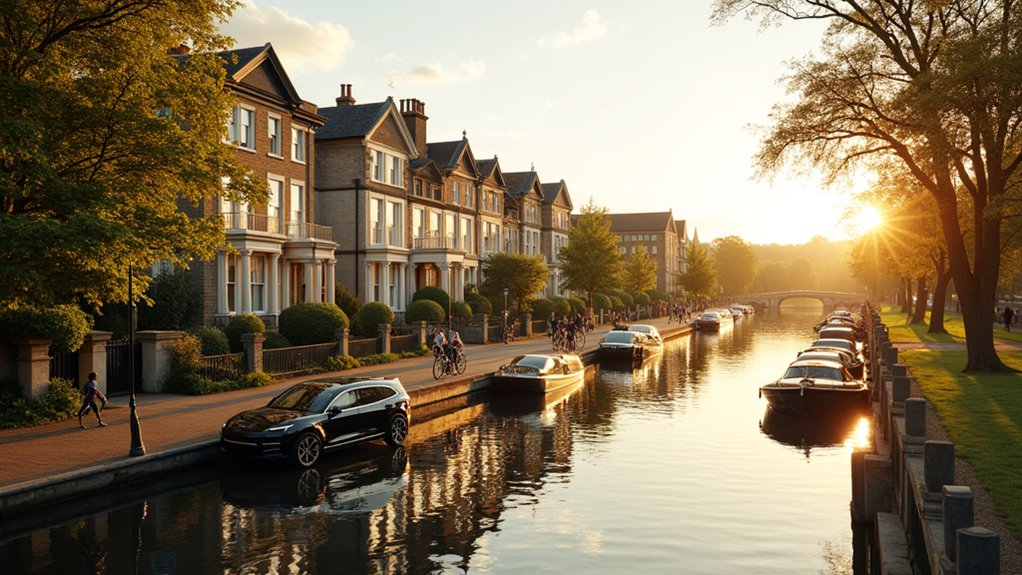
In 2026, you’ll see Richmond’s luxury pricing track two measurable drivers: prime school catchments and the riverside lifestyle premium.
If you buy inside top-performing catchments, you’re paying for demand resilience and faster liquidity when you exit.
If you secure a Thames-adjacent address, you’re underwriting scarcity that typically converts into tighter discounting and stronger long-term ROI.
Prime School Catchments
As buyers keep pricing in long-term livability, Richmond’s prime school catchments have become a measurable driver of 2026’s luxury demand. With walk-to-school zones around top-rated state primaries and leading independents, supply is tightening and supporting faster resale velocity.
You’ll typically see stronger bid depth and fewer renegotiations when a home sits inside a proven catchment. This is because buyers model years of reduced travel time and stable demand at exit.
To maximise ROI, prioritise streets with consistent admissions history and short, safe walking routes. Then benchmark against recent solds within 300–600 metres.
Invest selectively in luxury home features that matter to family buyers—storage, flexible study space, acoustic glazing—while keeping property maintenance audit-ready to protect survey outcomes and keep days-on-market low.
Riverside Lifestyle Premium
Why does a Thames address in Richmond still command a clear premium in 2026? You’re buying scarcity plus daily utility: limited frontage, protected sightlines, and walkable access to Petersham Meadows, Richmond Green, and the station.
Recent sales show riverside homes typically trade 10–20% above comparable streets, and that spread holds because demand stays resilient even as borrowing costs fluctuate.
You can also monetise lifestyle: corporate lets and relocations pay more for terraces and views, lifting achievable rents by roughly 5–12% versus inland stock.
Add the amenity flywheel—riverfront dining, towpath running, and boating leisure—and you reduce vacancy risk.
For ROI, prioritise flood resilience, service-charge discipline, and proven view corridors to protect resale.
How Do Richmond Park, the Thames and Schools Raise Prices?
You’ll typically pay a measurable premium for homes within easy walking distance of Richmond Park, because constrained supply around green space pushes resale values and rental demand.
Add the Thames frontage and you’re buying a scarcity asset that can tighten void periods and support stronger rental yields, especially for executive tenants.
When you prioritise top-ranked catchments, you also widen the buyer pool and reduce downside risk—key levers for ROI when you model exit liquidity.
Richmond Park Premium
Even if Richmond’s wider market cools, homes near Richmond Park, the Thames, and top-performing schools still command a measurable price premium because buyers pay for scarcity and long-term desirability.
Focus on the park-led uplift: prime streets abutting the park typically trade at a clear premium versus similar stock a short walk away, and houses with direct park views push values higher again.
You’re buying protected outlooks and constrained supply, which tends to compress downside risk and support resale liquidity.
For ROI, prioritise a well-specified family house or luxury estate that maximises frontage, light, and view corridors rather than sheer square footage.
Track £/sq ft differentials across “park edge” micro-locations, then model exit value using conservative premiums to avoid overpaying today.
Schools And River Appeal
Park-edge premiums set the baseline, but Richmond’s strongest price growth usually appears where three demand drivers stack: Richmond Park proximity, Thames-side access, and high-performing school catchments. If you buy inside these overlaps, you’re underwriting scarcity: constrained green-belt boundaries, limited riverside stock, and persistent family demand that’s less rate-sensitive.
Track School rankings and you’ll see why: top primaries and secondaries compress days-on-market and defend values in softer cycles.
Then add River activities—rowing clubs, towpath commuting, weekend cafés—and you widen the buyer pool to lifestyle-led professionals and downsizers.
Practically, prioritise walkable access to the park gates, the Thames Path, and catchment lines; you’ll capture a rental premium, reduce vacancy risk, and improve resale liquidity when you exit.
How Can Sellers Maximise Richmond Luxury Sale Prices?
While Richmond’s prime market still rewards scarcity and lifestyle appeal, sellers only capture top-end prices when they run the sale like an ROI exercise. Start with a pricing model: benchmark against the last 6–9 months of £/sq ft for your micro-location, then adjust for condition, EPC, and outdoor space.
Treat Luxury renovation as a capped return, not a wishlist; prioritise kitchens, bathrooms, lighting, and storage, and avoid over-spec that outpaces local comparables.
Stage for scale: declutter, repaint, and rent premium furniture to lift perceived size and flow.
Launch like a Market investment: pre-market testing, tight photography, floorplans, and a two-week viewing window to concentrate demand.
Negotiate with data, not sentiment.
Key Risks for Richmond Prime Prices in 2026–27
If you’re underwriting a Richmond prime sale for 2026–27, treat pricing risk as a blend of rate sensitivity and liquidity rather than “local demand” headlines.
Your downside case should model a 50–100 bps mortgage shift, because even cash buyers anchor to financing yields.
Watch absorption: if £3m+ stock rises and days-on-market extend, you’ll face wider bid-ask spreads and sharper discounting.
Build a liquidity buffer into your exit price, not just your target.
Market volatility also hits discretionary upgrades: overpaying for Luxury amenities can compress ROI if buyers reprice “nice-to-haves” like cinemas, gyms, or smart home packages.
Stress-test your appraisal against comparable homes without those features.
Finally, factor policy risk—stamp duty tweaks and EPC tightening can reduce net proceeds quickly.
Frequently Asked Questions
Do I Need Planning Permission for Richmond Conservation-Area Renovations?
You’ll likely need planning permission in Richmond conservation areas for exterior changes, windows, roofing, extensions, or demolitions; check Article 4 directions. Prioritise Historic preservation and secure renovation permits early to avoid costly delays.
How Long Do Prime Richmond Conveyancing and Searches Typically Take?
You’ll typically complete prime Richmond conveyancing and searches in 6–12 weeks; expedite to 4–6 with a proactive solicitor. Your Conveyancing timeline depends on lender speed, search backlogs, and Property valuation queries impacting ROI certainty.
What Additional Stamp Duty Applies for Overseas or Second-Home Buyers?
You’ll pay a 3% Second home surcharge on top of standard SDLT, plus a 2% non‑resident surcharge for Overseas investment. Test the theory: this “tax drag” can cut ROI materially—model it upfront.
Are There Restrictions on Short-Term Lettings for Luxury Homes in Richmond?
Yes—you’re capped at 90 nights per year in Greater London without planning consent, so you’ll need Short term leasing permits beyond that. Luxury rental regulations also require licensing, safety compliance, and platform reporting, impacting ROI.
How Do Flood-Risk Assessments Affect Thames-Side Property Insurance Quotes?
Flood-risk assessments raise or lower your Thames-side quotes by mapping Flood zones and projected losses; higher risk means higher Insurance premiums, bigger excesses, and stricter terms. You’ll cut costs by proving resilience upgrades and better drainage.