
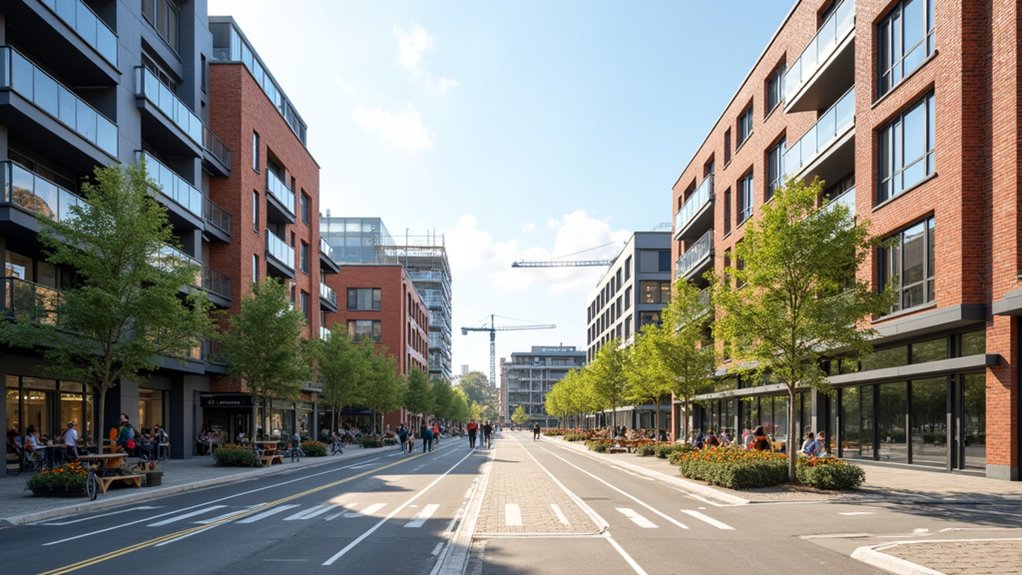

If you’re considering Stevenage right now, the numbers make it hard to ignore: average prices around £320k–£340k and gross yields typically 4%–6%, with demand strongest near the station and key amenities. You’re also buying into ongoing regeneration, which can tighten supply, lift rents, and support values if delivery stays on track. But the margin can shrink fast once you factor in new-build competition and service charges—so where do you actually win?
Key Takeaways
- Stevenage remains affordable versus Hitchin and Welwyn, with typical sold prices around £320k–£340k for 2–3 bed homes.
- Ongoing regeneration is lifting footfall, amenities, and tenant demand, often supporting rent growth within 12–36 months.
- Strong London connectivity via direct rail services and the A1(M) underpins commuter demand and resilience in rental occupancy.
- Gross yields typically range from 4%–6%, generally higher than nearby hotspots, with HMOs and some flats delivering the top end.
- Investors mitigate risks by avoiding weak micro-locations, stress-testing rents against new-build supply, and scrutinising leasehold service charges.
Is Stevenage Worth Investing in Now? Key Numbers

Although London’s prices keep stretching budgets, Stevenage still offers investors a compelling numbers-led case: average sold prices sit around £320k–£340k. You can often secure 2–3 bed homes below comparable Hertfordshire commuter hotspots, while keeping access to London via direct rail links and the A1(M).
Typical gross yields commonly land around 4%–6% depending on stock, with HMOs and well-specified flats skewing higher. You’ll want to track vacancy risk by focusing on walkable stations, employment nodes, and proven tenant demand from life sciences, aerospace, and public-sector employers.
Urban development pipelines and community engagement initiatives matter because they reduce planning friction and improve lettability. Run deal maths on service charges, EPC upgrades, and interest coverage before you bid.
How Stevenage Regeneration Could Lift Rents and Values
Where can regeneration move the needle fastest for your Stevenage deal? Focus on areas benefiting from town-centre urban renewal: new public environment, retail, and leisure typically lift footfall, tenant demand, and achievable rents within a 12–36 month window. Track planning approvals, unit pre-lets, and transport improvements; each reduces vacancy risk and supports sharper rental growth.
You’ll also see value uplift where community development strengthens schools, parks, and safety perceptions, because these change how renters price convenience and liveability.
Target stock that’s walkable to the station, employment hubs, and refreshed amenities; tenants pay premiums for shorter commutes and better services.
Underwrite conservatively, then stress-test upside scenarios using comparable rent re-sets after refurbishments and lease renewals.
Stevenage Prices and Yields vs Hitchin, Letchworth, Welwyn
How does Stevenage stack up on price and yield when you benchmark it against Hitchin, Letchworth Garden City, and Welwyn? You’ll typically buy in Stevenage at a meaningful discount to Hitchin and Welwyn, where scarcity and commuter demand push prices higher.
That lower entry price can translate into stronger gross yields: many investors target roughly mid‑4% to 6% in Stevenage, versus nearer 3% to 5% in the pricier neighbours, assuming similar property condition and leverage.
You also get solid fundamentals: improving Local amenities around the town centre and station, plus transportation improvements that keep London access competitive.
If you’re yield-led and want upside from regeneration, Stevenage often offers a better risk-reward balance than the premium postcodes nearby.
Best Stevenage Areas for Buy-to-Let (By Tenant Type)
If you match the right Stevenage micro‑location to your target tenant, you can usually push occupancy higher and protect rent levels even when the wider market softens.
For commuters, focus on Stevenage Town Centre and the station zone: fast rail to King’s Cross plus offices and retail align with Tenant preferences for walkability and time savings.
For hospital and science-park staff, look near Lister Hospital and Gunnels Wood, where shift patterns reward short, reliable commutes and practical neighborhood amenities.
For families, prioritize Great Ashby and Chells Manor: larger layouts, schools, parks, and supermarkets support longer tenancies.
For value-driven sharers, target Pin Green and parts of Bedwell, where pricing sensitivity is higher but demand stays linked to local jobs and bus routes.
Always verify exact streets.
Stevenage Investor Risks: Voids, New Builds, Service Charges
Although Stevenage’s regeneration and transport links keep demand resilient, you can still lose yield quickly through three predictable risk points: voids in the wrong micro‑location or unit type, oversupply from nearby new‑build phases that cap rent growth, and service charges that quietly erode net returns on flats.
Reduce voids by tracking lettings speed street‑by‑street, pricing within the top third of comparable listings, and targeting layouts tenants search for most (2‑bed houses, parking, gardens).
Treat new builds like competing stock: if a phase is completing within 6–12 months, stress‑test rents at today’s level and budget incentives.
On leaseholds, ask for three years’ service‑charge accounts and planned works; high charges plus maintenance costs can turn “affordable” flats into cash‑draining vacant properties.
Frequently Asked Questions
What Are the Stamp Duty and Legal Costs for Buying in Stevenage?
Stamp duty feels like a tollgate: you’ll pay Stamp duty rates of 0–12% in England, depending on price and buyer status. You’ll budget Legal fee estimates around £1,200–£2,000 plus disbursements.
Do Stevenage Rental Properties Require HMO Licensing or Additional Permits?
You’ll need HMO licensing if you rent to 5+ occupants from 2+ households sharing facilities; smaller HMOs may still need licensing under local schemes. You should also budget for additional permits: selective licensing, planning, safety.
How Quickly Can Investors Typically Complete a Purchase in Stevenage?
You can typically complete in 6–10 weeks—sometimes 2–4 if you buy cash. But here’s the twist: market trends and your investment strategies decide speed, as surveys, chain length, and conveyancing bottlenecks shape timelines.
What Property Management Fees Do Letting Agents in Stevenage Usually Charge?
You’ll usually pay letting agents 8–15% of monthly rent for full management, plus setup fees (£200–£500). Make certain quotes cover tenant screening, property maintenance coordination, and renewal charges, so you protect yield and reduce voids.
Are There Any Local Landlord Schemes or Selective Licensing Zones in Stevenage?
You’ll need to check Stevenage Borough Council’s latest Licensing regulations: selective licensing may apply in defined wards, while HMOs follow mandatory licensing. You can also access landlord incentives, including grants, accreditation support, and advice.