


Crossrail acts like a fast-moving tide in Iver, pulling prices upward where access is easiest. If you’re weighing ROI, you can’t ignore the 20–25 minute run into central London and the premium that’s starting to cluster near Bangors Road South and Station Road. You’ll want to separate hype from sustainable uplift by tracking sold data, rental yields, and walk-to-station appeal—but the real question is where the upside still hides…
Key Takeaways
- The Elizabeth Line cuts Iver–Paddington journeys to roughly 20–25 minutes, making Iver far more attractive to London commuters.
- Better through-services reduce interchange risk and improve reliability, increasing demand for homes within walking distance of Iver station.
- Properties near Station Road and Bangors Road South often command mid-single-digit price premiums versus similar homes farther from the station.
- Rising commuter-tenant demand has strengthened rents, reduced voids, and improved tenancy stability, supporting higher capital values.
- Price growth can be capped by higher mortgage rates, new-build supply, landlord sell-offs, and delays to local infrastructure upgrades.
How Does the Elizabeth Line Change Iver Commute Times?
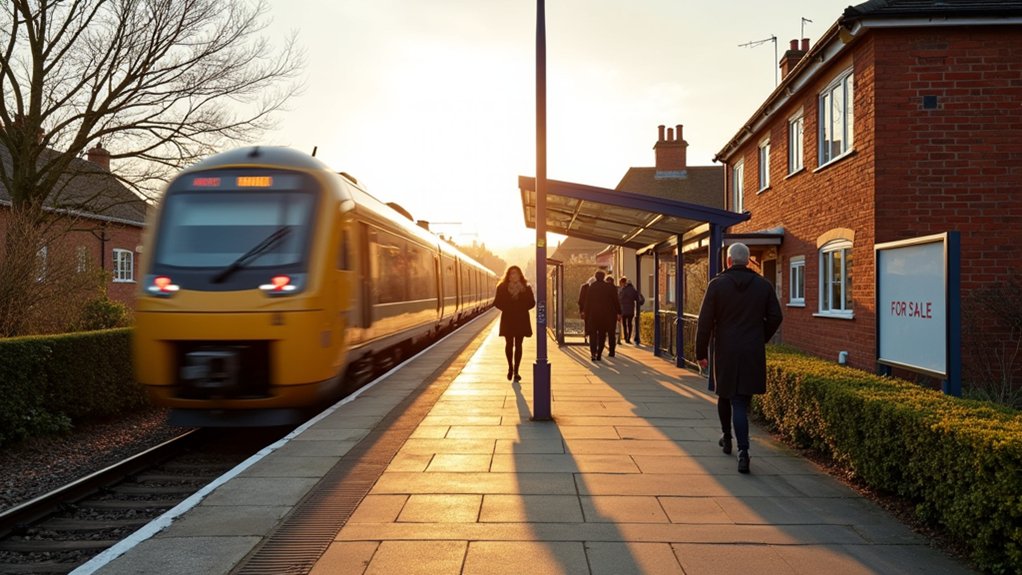
Because the Elizabeth Line plugs Iver into a high-frequency, central-London rail spine, your commute becomes faster, more predictable, and easier to value in pounds and pence: from Iver station you can now reach Paddington in roughly 20–25 minutes on through-services, with direct access onward to the West End, the City, and Canary Wharf without a terminal change.
You cut interchange risk, shrink door-to-door variance, and gain more peak options, so you can price in reliability, not just speed. That time saving compounds across five days, supporting longer working hours or better work-life balance without relocating.
Better Local infrastructure around the station improves last-mile efficiency, while community amenities nearby reduce errand trips and boost midweek convenience. You’ll also see clearer travel budgets and fewer taxi fallbacks.
How Big Is the Elizabeth Line Price Premium in Iver?
While the exact uplift shifts by street, property type, and how “walkable to the platform” you are, the Elizabeth Line has created a measurable price premium in Iver by turning commute time into a tradable asset. Buyers typically pay more for homes within easy reach of Iver station than comparable stock farther out, and that gap widens for properties that deliver a genuinely simple, low-friction London run (no parking hassle, no awkward interchange, reliable peak frequency).
In practice, you’ll often see mid-single-digit uplifts versus similar homes beyond the easy-catchment, with sharper premiums where turnkey condition meets strong local amenities. For ROI, you’re underwriting rental demand from London workers, tighter voids, and firmer resale liquidity.
Watch also for community development that compounds value by improving retail mix, streetscape, and perceived safety.
Which Parts of Iver Are Best for Station Access?
That Elizabeth Line premium gets most pronounced when you can genuinely treat Iver station as a walk-up asset, so location selection matters as much as property condition. Prioritise homes around Station Road and Bangors Road South, where you can reach platforms quickly without relying on parking.
You’ll also like the tighter rental void risk because tenants value predictable commute times.
For family lets, target the core village streets near the High Street: you’re still within a sensible walk, and you can market local amenities like shops, cafés, schools, and parks as part of the package.
If you’re aiming for longer holds, watch emerging pockets edging toward Richings Park and Thorney Mill Road, where community development can improve footpaths, lighting, and perceived safety, tightening yield resilience over time.
How Do Iver Prices Compare With Nearby Elizabeth Line Stops?
If you benchmark Iver against nearby Elizabeth Line stops, you’ll typically find it priced below the “Zone-adjacent” magnets like Ealing Broadway and West Drayton but above more peripheral options where the commute uplift feels less immediate.
That gap can work in your favour: you’re buying access to the same core line while sidestepping some London-adjacent premiums. Compare like-for-like stock—period cottages, 1930s semis, and newer apartments—and you’ll see Iver’s pricing reflects steadier Historical development and a lower density feel.
Yet Local amenities still support buyer demand: village services, schools, green space, and quick links to Slough, Heathrow, and the M4. Track £/sq ft, days on market, and discount-to-ask to spot mispriced listings.
What Does the Elizabeth Line Mean for Iver Rental Demand?
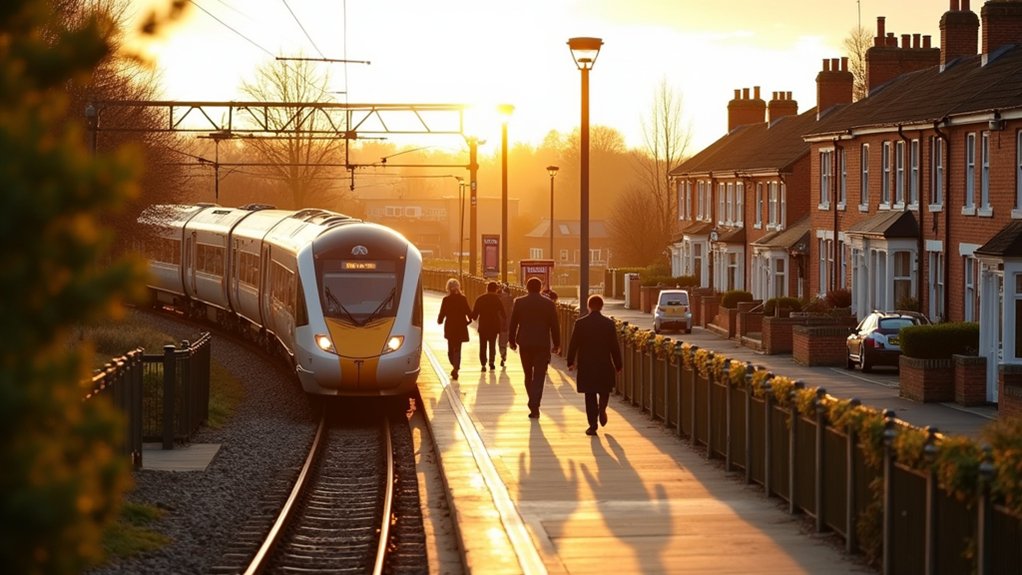
With the Elizabeth Line on your doorstep, you can target commuter tenants who’ll pay for faster, simpler access into Central London and key employment hubs. That uplift can tighten void periods and support rental yields.
But you’ll need to price against nearby Elizabeth Line stops and local stock to protect your ROI. Expect sharper competition from other landlords and new listings, so you can’t rely on travel-time gains alone—you’ll have to win on spec, EPC, and tenant-ready presentation.
Commuter Tenant Demand
As the Elizabeth Line compresses journey times to key London job hubs, Iver’s rental market starts pricing in a bigger, more reliable commuter tenant pool. You’ll see demand concentrate among mid-to-senior earners who want Zone-friendly access without central London rents, and who’ll commit to longer tenancies to lock in predictable commutes.
To capture this audience, you should position stock around walkable Local amenities—grocers, gyms, cafés, schools—and stress door-to-platform convenience in listings.
Inside, prioritize Luxury amenities that reduce friction for busy professionals: fast broadband, sound insulation, secure parking, smart heating, and modern kitchens.
You’ll also benefit from targeting corporate lets and project-based relocations tied to Heathrow, Paddington, and the City, where reliability beats bargain pricing.
Rental Yields And Competition
Even though the Elizabeth Line lifts Iver’s tenant demand, it also attracts more investor stock, so your yields now hinge on how sharply you differentiate and price. Track local market trends weekly: new listings, achieved rents, and days-on-market, then undercut stale comparables by 1–2% to lease faster without over-discounting.
To defend net yield, tighten your spec where tenants pay premiums: fast broadband, sound insulation, parking, and energy efficiency. Add selective luxury amenities—smart entry, higher-grade appliances, and a tidy communal area—only when capex pays back within 24–36 months.
Expect more professional tenants and fewer voids, but also more “new-build” competition. Lock in longer tenancies with fair rent reviews and strong referencing, and you’ll stabilise cashflow while prices rise.
Who’s Buying in Iver Since the Elizabeth Line Launched?
You’re now seeing three buyer groups set the pace in Iver post–Elizabeth line: London commuters relocating for more space without sacrificing fast access, yield-focused investors targeting strong tenant demand, and first-time buyers stretching budgets beyond Zone pricing.
If you track who’s bidding and why, you can price accurately, spot the hottest stock, and protect your ROI. Watch how each group’s priorities—commute time, rental yields, and affordability—translate into offer strength and speed to exchange.
London Commuters Relocating
Since the Elizabeth Line cut journey times and reduced the friction of getting into central London, Iver’s buyer profile has shifted decisively toward value-seeking commuters: City and Canary Wharf professionals, hybrid workers doing 2–3 office days, and young families trading Zone 2–4 flats for more space without sacrificing connectivity.
You’re seeing relocators target three- and four-bed semis, modern townhouses, and period cottages within easy station access, because the commute premium now prices in predictably.
You’ll also notice demand clustering around Rural amenities—country walks, river access, and village pubs—plus strong Local schooling, which supports longer tenancies and lower churn for owners.
If you’re buying to live in, you’re effectively arbitraging London wages against Buckinghamshire price points while keeping optionality for future moves.
Investors And First-Time Buyers
Why has Iver’s post–Elizabeth Line demand widened beyond relocators? Because you’re now seeing two additional buyer pools chasing the same limited stock: yield-driven investors and budget-stretched first-time buyers.
If you’re investing, you’ll target modern flats near the station or family semis that let you add value through light refurb and re-let fast. Current market trends show stronger tenant demand from hybrid workers who want Zone-to-non-Zone savings without losing Central access.
You’ll run tighter underwriting: stress-test rates, prioritise EPC C+ to protect resale, and price in service charges. Your investment strategies should focus on walk-to-rail, parking, and low void risk, not just headline yield.
If you’re buying your first home, you’ll compete hardest at the entry level, pushing best-and-final offers.
What Could Slow Iver Property Price Growth Next?
Although Crossrail access has put Iver firmly on investors’ radars, price growth won’t stay on autopilot if the fundamentals wobble. You’ll feel the drag first if Market stability deteriorates: higher mortgage rates, tighter underwriting, or a recession can thin buyer demand and cap achievable rents.
If Infrastructure investments stall—delayed local road upgrades, limited station capacity, or underfunded town-centre improvements—you won’t get the uplift you’ve priced in. Supply can also reset the curve: a surge of new-build completions or landlords selling into regulation changes can widen choice and pressure asking prices.
Watch employer hiring trends around Heathrow and Slough; softer labour markets reduce tenant churn and weaken yields. Finally, planning constraints or environmental rules can raise renovation costs and dilute returns.
How to Tell If an Iver Home Is Good Value Now?
Before you treat an asking price in Iver as “Crossrail-proof,” benchmark it against today’s micro-market, not last year’s hype. Pull sold-price data for the same street, property type, and condition within 90 days, then price per square foot it. If the premium exceeds typical uplift for walkability to Iver station, you’re overpaying.
Test rental yield: compare achievable rent to mortgage costs and service charges, and stress it at higher rates.
Inspect capex: roof, damp, glazing, and EPC upgrades can erase headline discounts.
Pay for Historic architecture only if it improves resale liquidity and survey risk is priced in.
Finally, score local amenities—schools, parks, shops—because buyers pay for convenience, not promises.
Frequently Asked Questions
Are There Planned Developments or New Housing Projects in Iver?
Yes, you’ll find planned housing schemes in and around Iver, including infill sites and larger applications near transport corridors. Track council planning portals; local amenities and transportation improvements can lift rents, exit values, and demand.
What Are the Best Primary and Secondary Schools Near Iver?
You’ll want Burnham Grammar, Upton Court Grammar, and Langley Grammar for strong Local school rankings; for primaries, check Iver Heath Infant/Junior and nearby Langley Hall. Prioritize extracurricular activities—they protect resale demand and rental stability.
How Do Council Tax Rates in Iver Compare to Neighbouring Areas?
You’ll typically find Iver’s property tax (Council fee) broadly mid-range versus Slough and slightly lower than parts of South Bucks/Windsor. Check banding: small differences compound ROI via annual holding costs and resale appeal.
What Is the Flood Risk in Iver and How Does It Affect Insurance?
In Iver, flood risk varies—check maps, check history, check drains. Higher-risk pockets raise insurance premiums and add exclusions. Prioritise Flood mitigation, secure surveys, and negotiate pricing; you’ll protect yield and reduce renewal shocks.
Are There Any Conservation Areas or Planning Restrictions in Iver?
Yes—parts of Iver sit within conservation areas, and you’ll face Historic preservation controls and stricter Architectural regulations. You must secure tighter approvals for extensions, windows, and materials, but compliant upgrades can protect resale value and yield.