
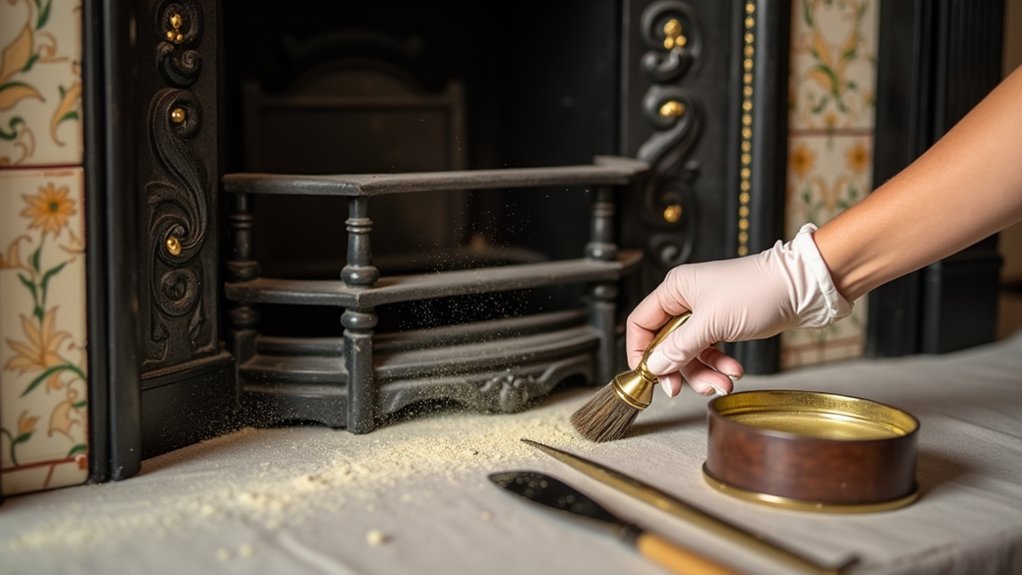

Soot dust floats in a shaft of light as you stand at a Victorian hearth, tracing crisp cast-iron scrollwork with your eyes. Before you spend on polish or tiles, you check the chimney, damper, and surround for cracks, loose joints, and water staining. You clean with gentle products, repair only what’s failing, and choose discreet safety upgrades that don’t look modern. But the real savings come from what you do next, before winter shows you what you missed…
Key Takeaways
- Inspect the hearth, opening, breast, and flue for cracks, loose masonry, damp staining, and damper issues before any restoration.
- Book a certified chimney sweep and smoke-draw test to clear debris, nests, and creosote, and confirm safe ventilation.
- Clean gently: HEPA-vacuum ash, degrease cast iron, wire-brush rust, and use pH-neutral cleaners on tiles and marble.
- Repair authentically with lime mortar repointing, minimal re-grouting, and careful paint stripping; refinish wood with shellac or wax.
- Upgrade safety discreetly: Victorian-style fireguard, smoke and CO alarms, lidded ash bucket, and draft control via a top-sealing damper or register plate.
Assess a Victorian Fireplace (Safety, Chimney, Structure)
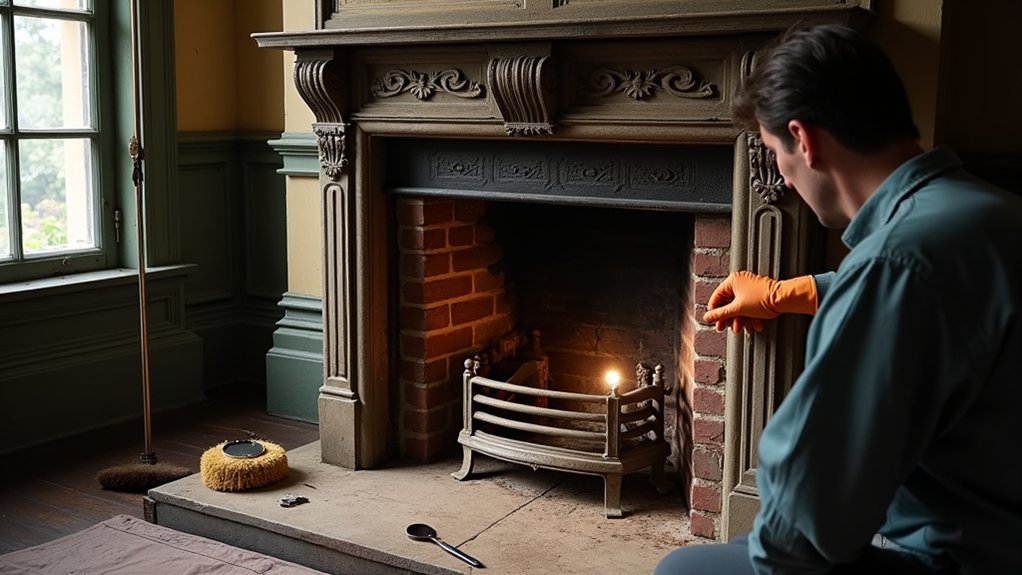
Before you spend money on tiles, cast-iron inserts, or a new surround, start by evaluating what you’ve actually got: check the fireplace opening and hearth for cracks, loose brick, and signs of past overheating. Probe gently with a screwdriver; soft mortar or movement means you’ll need repointing before any cosmetic work.
Next, assess the chimney and flue. Shine a light up the throat, look for rubble, nests, or tarry creosote, and confirm the damper operates. If you smell soot or see staining upstairs, budget for a certified sweep and a smoke-draw test.
Check the breast and adjacent walls for damp, salts, and bulging plaster. Photograph decorative motifs and note dimensions so any structural fixes preserve Historical accuracy.
Clean and Repair Cast Iron, Tile, Marble, Wood
Once you’ve confirmed the fireplace is sound, tackle the visible materials one at a time—cast iron, tile, marble, then wood—so you don’t spread soot, stripper, or moisture onto freshly finished surfaces.
Vacuum ash with a HEPA unit, then degrease iron with mineral spirits; wire-brush rust, wipe, and apply stove polish in thin coats.
For Fire grate restoration, check bars for cracks and replace missing bolts before blackening.
Clean tiles with pH-neutral soap and a soft brush; re-grout only failed joints, keeping new grout off glaze.
On marble, skip acids; use a poultice for stains, then buff with marble-safe polish.
For Decorative mantels, strip paint with low-odor gel, neutralize, sand lightly, and seal with shellac or wax.
Tighten loose joints, fill chips, and touch up stain.
Add Safe Upgrades That Keep Victorian Character
Although you want your fireplace to look original, you can add a few low-profile upgrades that make it safer, cleaner, and easier to use without stripping away Victorian detail.
Start with a discreet, BS-certified fireguard or spark screen in dark iron to match Victorian aesthetics.
Install a carbon monoxide alarm and a nearby smoke alarm, and keep a small extinguisher within reach for Modern safety.
If you burn solid fuel, add a stove-style thermometer and a lidded ash bucket to reduce mess and overheating risk.
Swap worn gas taps or isolation valves for new equivalents, then reuse period-style knobs so the look stays authentic.
Finally, fit a slim LED picture light above the mantel for safe, low-heat task lighting at night.
Prevent Smoke, Drafts, and Damage Year-Round
When you keep your Victorian fireplace sealed, vented, and dry in every season, you stop most smoke blowback, cold drafts, and damp-related damage before they start. Fit a top-sealing damper or tightly closing throat damper, and add a discreet cast-iron register plate to block warm-air loss without hurting Victorian fireplace aesthetics.
Check the chimney cap and flashing yearly; small leaks rot lintels and stain plaster fast.
For cleaner draw, sweep the flue, clear the smoke shelf, and confirm the liner matches your opening. If you can’t reline, use a stainless flex liner sized by a pro for Historical accuracy restoration and safety.
In summer, crack the damper and use a ventilating cowl to reduce condensation. Store ash dry, and repoint loose bricks with lime mortar.
Frequently Asked Questions
Can I Claim a Tax Credit or Grant for Restoring a Victorian Fireplace?
You might, but it depends on your location and program rules. Check local historic-preservation grants, energy-efficiency credits, and permits. Document historical accuracy, list fireplace materials, keep receipts, and confirm eligibility before spending to avoid surprises.
How Do I Verify My Fireplace Is Truly Victorian and Not a Later Reproduction?
You verify it by checking maker’s marks, cast-iron seams, and patina, then comparing Decorative tile patterns to dated catalog images. Hire a low-cost specialist appraisal before Mantel refurbishment; avoid sanding away tool marks.
What Restoration Steps Require Planning Permission or Listed-Building Consent?
You’ll need consent for altering chimney breasts, flues, hearth height, or removing original surrounds in listed homes; planning may apply externally. Keep Historical accuracy, document Material sourcing, and budget for surveys, drawings, and specialist reports.
How Much Does Professional Restoration Typically Cost, and What Affects Pricing?
You’ll typically pay £800–£5,000+—but wait: pricing shifts fast. Restoration techniques, Historical accuracy, damage level, missing parts, hearth/liner work, access, soot/asbestos cleanup, specialist labour, and region all drive quotes. Get itemised estimates.
Will Restoring the Fireplace Increase Home Value or Improve Resale Appeal?
Yes, you’ll often boost home value and resale appeal by restoring the fireplace, especially in period homes. Prioritize safe chimney repair, then highlight decorative tile and original details. You’ll spend wisely and photograph improvements clearly.