
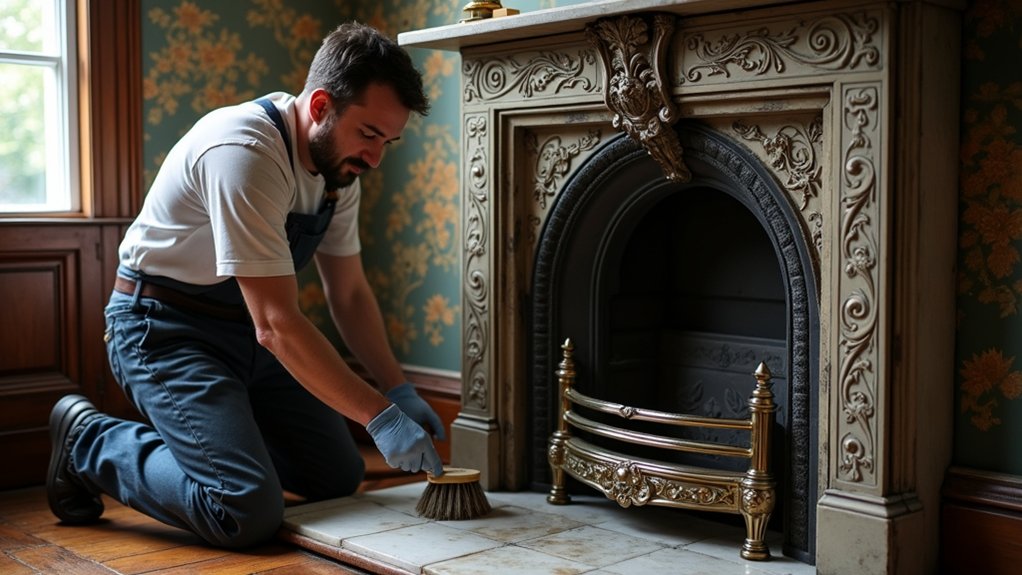

You can restore original Victorian fireplaces without erasing the details that give it value, but you’ll need to assess its condition before you start. Check the hearth, tiles, cast iron, surround, and flue for damage, movement, rust, and moisture. Use gentle cleaning methods and reversible repairs wherever possible. The first decisions you make will determine whether you preserve an authentic feature or accidentally lose it.
Key Takeaways
- Inspect the fireplace, hearth, chimney, and flue for cracks, movement, loose masonry, and missing components before restoration begins.
- Document original tiles, cast iron, stonework, grates, and maker’s marks with photographs before cleaning or repairing anything.
- Clean tiles, stone, and cast iron gently using soft brushes, pH-neutral products, and minimal moisture; avoid acids, bleach, and abrasive cleaners.
- Reset loose tiles or hearth slabs with compatible lime-based mortar, and investigate structural cracks before undertaking cosmetic repairs.
- Maintain the fireplace with biannual condition checks and annual professional flue sweeping if it is used for fires.
Assess Victorian Fireplace Safety and Original Features
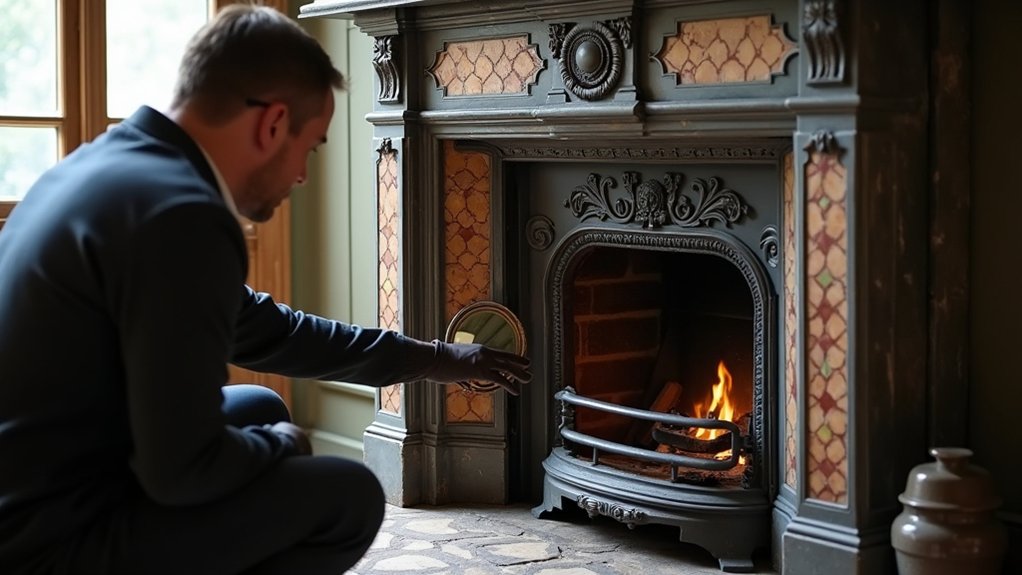
Before you restore a Victorian fireplace, inspect its condition, safety, and surviving original details. Photograph the mantel, surround, hearth, grate, registers, vents, and any maker’s marks before moving or repairing anything.
Check for cracks in the firebox, loose masonry, damaged lintels, missing dampers, and signs of chimney movement, such as stepped cracks or staining.
Ask a qualified chimney professional to inspect the flue, chimney stack, and fireplace opening, especially if you plan to burn fuel.
Confirm that the hearth projection and clearance requirements can meet Modern safety standards without unnecessarily altering period fabric.
Identify original components versus later additions by comparing construction methods, profiles, fixings, and local examples.
Retain sound early features wherever possible; they support Historical authenticity.
Record every intervention so future owners can understand what you preserved, repaired, or replaced.
Clean Victorian Fireplace Tiles, Iron, and Stone
Once you’ve documented the fireplace and confirmed it’s stable, clean each material with the gentlest method that will remove surface dirt without stripping historic finishes. Vacuum loose dust using a soft brush attachment, keeping it away from fragile edges and joints.
Wipe glazed tiles with a barely damp microfiber cloth and pH-neutral soap, then dry immediately. Test any cleaner in an inconspicuous area first, especially around detailed Victorian tile patterns, where abrasive products can dull glaze or remove painted decoration.
For cast iron, brush away dust with natural bristles and use a lightly oiled cloth only where appropriate. Avoid soaking metal, harsh wire brushes, and acidic cleaners that complicate Ironwork restoration.
Clean stone surrounds with a dry brush or distilled-water dampened sponge; never use household acids, bleach, or scouring powders. Keep moisture controlled and ventilate the room well.
Repair Cracked Tiles, Rust, and Loose Stone
Start repairs only after the fireplace is dry, stable, and fully documented, addressing defects in order of risk rather than appearance.
Reset loose tiles only when you can retain their original positions. Lift them carefully, remove failed bedding by hand, and use a compatible lime-based adhesive or mortar; don’t force modern cement behind fragile ceramics.
For cracked tiles, Decorative tile restoration may involve reversible conservation adhesive, edge support, and discreet filling rather than replacement. Keep any original fragments, even if they seem unusable.
Treat rust on iron inserts before it spreads beneath surviving finishes. Use gentle Rust removal techniques, such as fine wire wool, a brass brush, or a suitable rust converter tested in an inconspicuous area.
Vacuum debris, protect adjacent tile faces, and apply a thin conservation-grade protective coating. Recheck repaired areas after curing.
Restore the Victorian Hearth, Surround, and Flue
With tile and iron repairs complete, assess the hearth, surround, and flue as one working system: confirm the hearth is level, sound, and non-combustible; check the surround for movement, open joints, or heat damage; and have a qualified chimney professional inspect the flue for blockages, failed lining, moisture ingress, and safe draft.
Reset loose hearth slabs on a compatible lime-based bedding where appropriate, avoiding modern cement that can trap moisture. Repoint sound original masonry with a breathable mortar matched in colour, texture, and strength.
Don’t conceal structural cracks behind Victorian decor; investigate their cause before cosmetic work. Retain original profiles, proportions, and materials whenever possible to preserve Historical accuracy.
If the flue requires relining, choose a system sized for the intended fuel and fitted without damaging the chimney fabric or fireplace opening.
Maintain Your Victorian Fireplace Long-Term
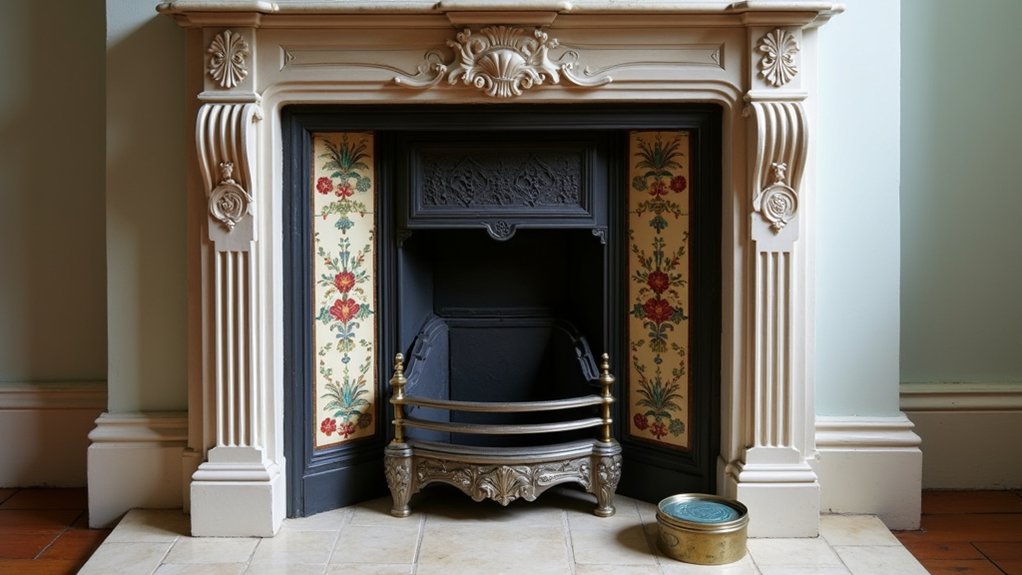
Although a Victorian fireplace can last for generations, it needs routine, gentle care to prevent small defects from becoming costly damage. Inspect the surround, hearth, grate, and tiles twice yearly for loose mortar, hairline cracks, rust, or staining.
Dust carved stone and cast iron with a soft brush; avoid acidic cleaners, wire wool, and harsh polishes that can erase original finishes.
Have a qualified chimney sweep inspect and clean the flue annually if you use the fire.
Keep damp fuel, plant pots, and wet logs away from the hearth to limit moisture damage.
Repoint failed joints with compatible lime mortar, not hard cement.
Photograph repairs and retain samples of paints or tiles. This record supports Historical accuracy preservation and helps you protect Victorian fireplace aesthetics during future maintenance. The same applies to other periods such as Georgian, for example.
Frequently Asked Questions
Can I Install a Gas Insert in an Original Victorian Fireplace?
Yes, you can install a gas insert, but you’ll need professional Gas insert installation, chimney inspection, and correct venting. Protect original surrounds and hearths, and prioritize Victorian fireplace safety by meeting local codes and preserving historic materials.
How Do I Date My Victorian Fireplace Accurately?
About 70% of Victorian fireplaces were altered later. You’ll date yours by examining tile marks, casting details, mantel materials, and chimney records. Use Victorian era craftsmanship clues and Fireplace dating techniques; photograph evidence before restoration.
Are Victorian Fireplace Restorations Protected by Listed-Building Regulations?
Yes, if your property is listed, you’ll usually need consent before altering a Victorian fireplace. Check local preservation guidelines, document original features, and use reversible repairs to protect historical authenticity and avoid enforcement action.
What Is the Typical Cost to Restore a Victorian Fireplace?
You’ll typically spend £500–£3,000, because Victorian charm apparently invoices by the crumb. Budget extra for fireplace paint, chimney cleaning, missing tiles, grate repairs, and specialist labour. Get itemised quotes before stripping anything.
Can I Source Matching Period-Appropriate Replacement Tiles?
Yes, you can source matching period-appropriate tiles through architectural salvage yards, specialist tile makers, and antique dealers. Prioritize Tile matching by comparing dimensions, glaze, and pattern; verify Historical accuracy using catalogues, photographs, or surviving fragments.