
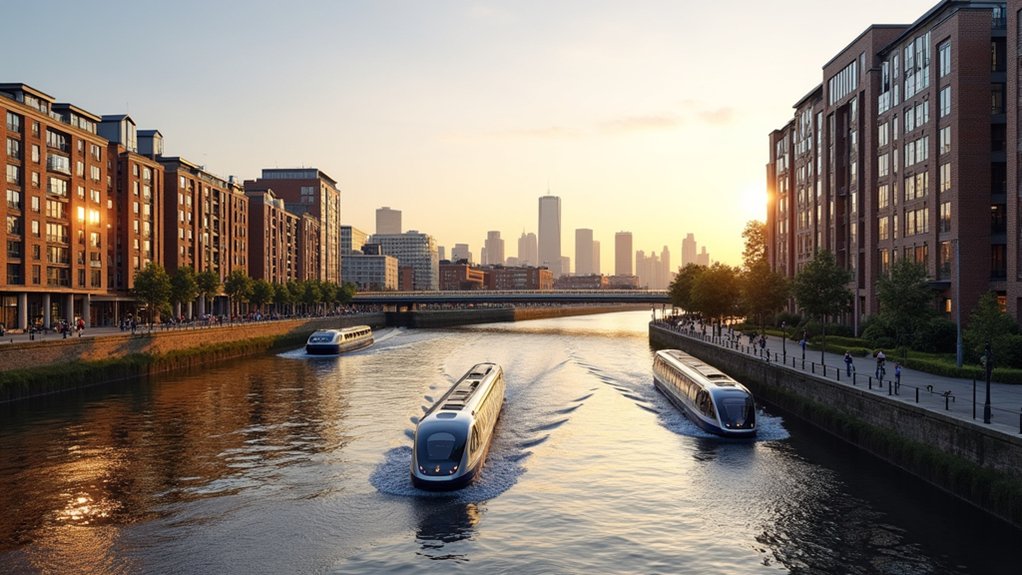

If you’re weighing Greenwich for your next buy-to-let, you’re looking at a rare mix of lifestyle demand and commuter logic. You can price for riverside appeal while relying on DLR, rail, Thames Clippers, and quick Elizabeth Line access to keep voids low. With typical yields around 4.0%–5.0% and regeneration still adding amenities, your upside hinges on where you buy, tenant profile, and pricing discipline—but which pockets actually outperform?
Key Takeaways
- Riverside Greenwich offers more space, newer finishes, and easier parking than Manhattan or Brooklyn, improving value and daily convenience.
- DLR from Cutty Sark/Greenwich reaches Canary Wharf in 10–15 minutes; the City is 25–35 minutes via interchanges.
- Thames Clippers from Greenwich Pier add reliable peak-hour river commuting, boosting appeal for City and Canary Wharf workers.
- Rail links to the Elizabeth Line expand access to the West End, Paddington, and Heathrow, widening the tenant pool.
- Rents average £1,700–£2,100 for 1-beds and £2,200–£3,000+ for 2-beds, with gross yields typically 4.0–5.5%.
Why Greenwich Renters Are Moving Here in 2026
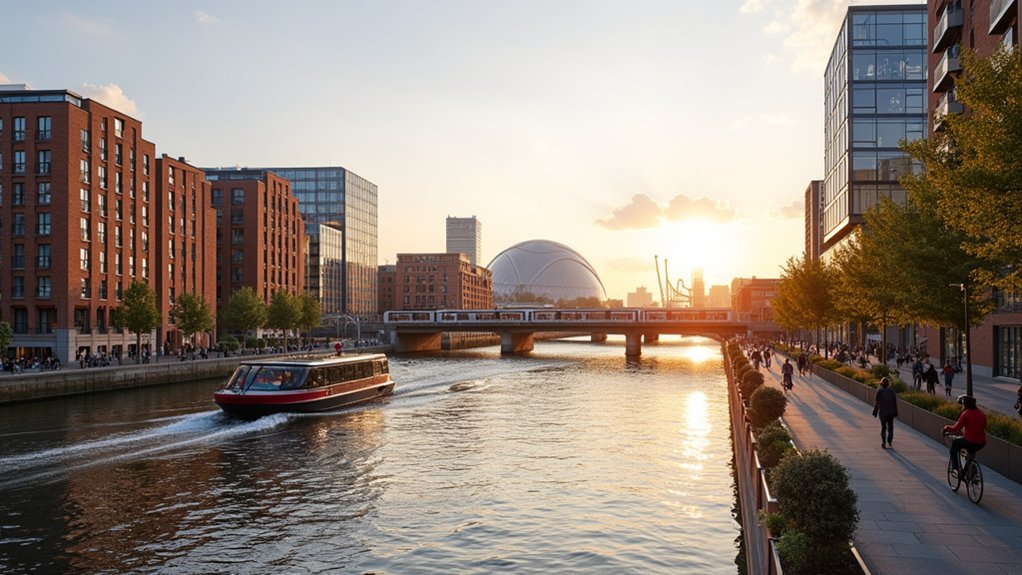
As rents climb across Manhattan and Brooklyn, Greenwich delivers a cleaner value equation: you’ll often get more square footage, newer finishes, and easier parking per dollar while keeping a fast commute into NYC via Metro-North.
You can benchmark ROI by tracking effective rent versus total monthly carry: utilities, parking, and amenity fees tend to run lower, lifting your net savings. Newer buildings reduce maintenance headaches, and in-unit laundry cuts paid services.
You also buy lifestyle efficiency: walkable waterfront paths, reliable groceries, and gyms near dense rental clusters. Weekends stretch further with Greenwich nightlife that doesn’t require surge pricing, plus local art programming that substitutes for pricier city outings.
Negotiate on longer leases; your landlord values stable occupancy in 2026.
Greenwich Transport: DLR, Rail, Elizabeth Line Access
If you’re renting riverside in Greenwich, you can cut commute time variability by pairing the DLR with Thames Clippers river services for fast links to Canary Wharf and the City.
You’ll also get solid rail options from Greenwich or Maze Hill, with easy interchanges to the Elizabeth line for high-frequency runs to the West End, Heathrow, and beyond.
Use these links to map door-to-door times and pick the spot that saves you the most minutes per week—because that’s the transport ROI that matters.
DLR And River Connections
How quickly can you get from riverside Greenwich to Canary Wharf, the City, or Heathrow without paying a Zone 1 premium? Use the DLR at Cutty Sark or Greenwich for fast access to Canary Wharf in about 10–15 minutes, tightening tenant commute times and supporting stronger rents.
For the City, switch to Tube interchanges and you’ll usually land in 25–35 minutes, depending on timing. You’ll also hedge disruption risk by marketing the river: Thames Clippers from Greenwich Pier add a reliable, premium-feel option that renters pay for, especially peak-hour professionals.
Factor walkability to the pier into your yield model, then price parking less aggressively. Harbor ecology and Riverside festivals boost weekend footfall, lifting short-let appeal and reducing voids.
Rail Links To Elizabeth Line
DLR speed and river options sell the Wharf, but tapping the Elizabeth line widens your tenant pool to higher-paid West End, Paddington, and Heathrow commuters without Zone 1 fares.
From Greenwich, you’ll push demand by marketing easy rail-to-Elizabeth transfers: Southeastern services to Abbey Wood connect straight onto the line, while nearby interchange options via Canary Wharf keep journey times competitive.
You should price and advertise “Elizabeth line access” as a premium feature: faster cross-London trips support higher rents and lower voids, especially for professionals who travel to Heathrow or hybrid offices.
Pair that with lifestyle proof points—Historical landmarks and Waterfront cafes—and you’ll convert viewings into leases.
Track uplift by comparing achieved rents against non-transfer comparables and adjust incentives accordingly.
Best Places to Rent in Greenwich (By Vibe & Budget)

While Greenwich’s riverside postcode commands a premium, you can still rent strategically by matching your budget to the right micro‑area and commute needs.
If you want walkable amenity density, target Greenwich Town Centre: you’ll cut last‑mile time to DLR/rail, and you’ll live near local cafes and riverside parks that support strong tenant demand and low void risk.
For sharper value, look south toward Maze Hill and Westcombe Park: you’ll often get more space per pound, plus fast rail into central London.
If you prioritise modern builds and predictable maintenance, focus on Greenwich Peninsula; you’ll trade heritage charm for newer stock, concierge options, and Jubilee Line access.
For a quieter, family‑leaning vibe, try Blackheath edge streets for green space and steadier occupancy.
Greenwich Rents and Rental Yields: Latest Benchmarks
Once you’ve picked the right Greenwich micro‑area for your tenant profile and commute pattern, the next step is benchmarking rents and yields so you can sanity‑check ROI before you sign.
Current asking rents typically cluster around £1,700–£2,100 pcm for 1‑beds and £2,200–£3,000 for 2‑beds, with larger riverside units pushing higher.
On yields, you’ll usually underwrite c. 4.0%–5.0% gross, with sharper deals nearer 5.5% if you buy well, keep service charges tight, and minimise voids.
Pressure-test cashflow by modeling a 5% rent dip and one-month annual vacancy.
Target tenants drawn to Greenwich nightlife and local art galleries; they’ll pay for walkability, but only if your spec’s clean and bills stay predictable.
What’s Pushing Demand Up (Regeneration, Schools, Jobs)
To forecast where rents and prices can move next, you’ll track the demand drivers: major regeneration schemes, strong schools, and a growing employment hub.
Regeneration typically lifts amenity density and transport links, which tightens vacancy and supports faster rent reversion on well-located stock.
Schools and job clusters keep tenant churn low and widen your applicant pool, improving cashflow stability and long-term ROI.
Major Regeneration Projects
Why are riverside homes in Greenwich seeing sharper demand curves? You’re watching regeneration compress travel times, upgrade public domain, and lift tenant willingness-to-pay.
Track Greenwich Peninsula’s phased delivery: new retail streets, improved riverfront access, and year-round programming that keeps footfall high. That mix supports steadier void rates and faster re-letting.
You also benefit from Urban greenery baked into masterplans—parks, pocket spaces, and riverside paths—which typically premiums new-build rents versus older stock.
Factor in Cultural festivals and venue-led events that extend peak-season demand and bolster short-let and corporate-let pricing.
For ROI, target units within a 10–15 minute walk of new nodes, and underwrite rent growth conservatively at 2–3% annually, then stress-test service charges.
Schools And Employment Hub
Regeneration sets the stage, but schools and jobs keep riverside demand in Greenwich sticky through the cycle.
When you buy near proven Educational facilities, you’re tapping a steady tenant base: families who renew leases to stay in catchments, and professionals who pay for convenience. Prioritise stock within a short walk of well-rated primaries, secondary options, and campus links; it typically reduces voids and stabilises rent growth.
On the jobs side, you’re not betting on one employer. You’re leveraging Local employment across Canary Wharf, the City, and Greenwich Peninsula’s expanding office, retail, and leisure footprint. That breadth supports resilient occupancy and lets you target multiple tenant profiles.
Run ROI numbers with conservative rent, assume faster re-lets, and price in fewer incentives to protect net yield.
Landlord Checklist: Buying and Letting in Greenwich
While Greenwich’s riverside postcode can command a rent premium, your ROI depends on getting the fundamentals right before you exchange. Stress-test achievable rent against service charges, ground rent, and letting fees; a 10% cost swing can wipe out your yield.
Prioritise units near DLR, Elizabeth line links, and Cutty Sark, where tenant demand stays liquid year-round.
Run a compliance audit: EPC, EICR, gas safety, smoke/CO alarms, and HMO rules if you’ll let by the room. Choose Property management that can prove void-rate and arrears data, not promises.
Lock in Lease agreements that protect cashflow: clear break clauses, rent review wording, and repair responsibilities.
Budget for 1–2 months’ annual maintenance and keep a contingency for major works on riverside blocks.
Frequently Asked Questions
Are Pets Allowed in Most Greenwich Rental Flats and Developments?
You can’t assume pets are allowed in most Greenwich rentals; many developments enforce Pet policies and strict Rental restrictions. Check the lease, ask managing agents, and budget for deposits to protect ROI and avoid voids.
How Noisy Are Riverside Apartments From Boats, Events, and Nightlife?
You’ll usually hear moderate noise: UK road traffic averages ~45–55 dB, similar to occasional Boat noise by day. Nightlife disturbance spikes weekends. You’ll protect ROI by choosing higher floors, double glazing, inward-facing units.
What Are Typical Service Charges and Who Pays Them in Rentals?
You’ll typically see service charges around £1,500–£3,500/year in London flats; your landlord pays them, covering Property maintenance. You may pay utilities/council tax. Confirm landlord responsibilities in the AST to protect ROI.
How Safe Is Greenwich at Night Around the River and Parks?
Nighttime safety in Greenwich is generally solid, but it’s not a fortress: stick to lit riverside paths, avoid secluded parks late, and watch park security. Check crime stats, patrol presence, CCTV coverage—they protect tenant demand and ROI.
Are Short-Term Lets and Airbnb Permitted in Greenwich Leasehold Buildings?
You can’t assume Airbnb’s permitted in Greenwich leasehold buildings; Leasehold restrictions often ban it. You must check your lease, get freeholder consent, and follow Short term rental regulations (90-night cap) to protect ROI, avoid fines.