
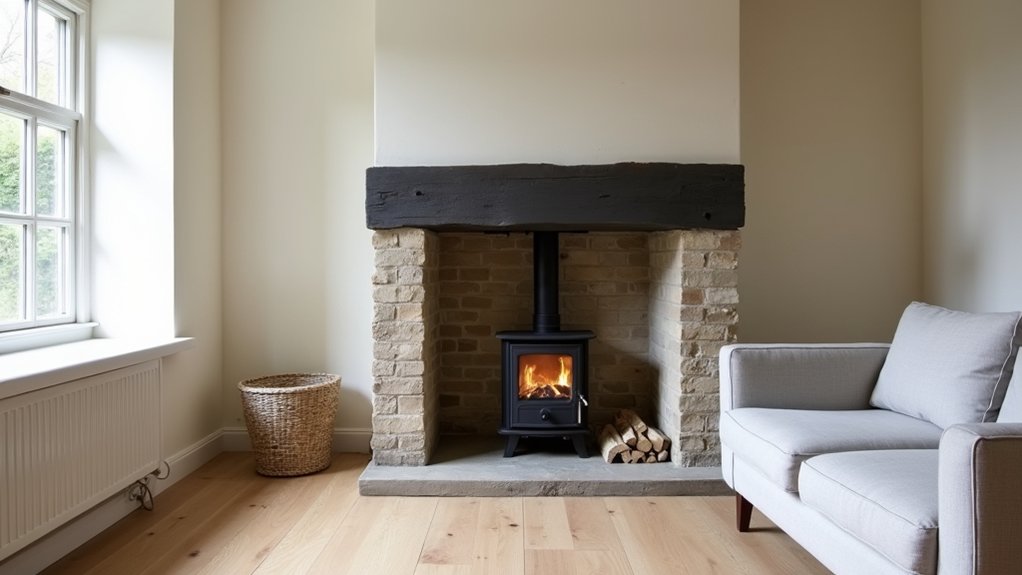

If you’re modernising a stone cottage, keeping the Inglenook fireplace can preserve character and boost appeal, but it can also lock you into higher heating bills, draughts, and tricky ventilation upgrades. You’ll need to check the chimney’s condition, the room layout, and whether a liner and stove insert will fit your budget. Before you commit to restoring or closing it up, test it against a few practical criteria…
Key Takeaways
- Assess whether the inglenook improves room layout and character or blocks circulation, daylight, and flexible furniture placement.
- Confirm the chimney and fireplace can be vented safely and meet current clearances and Building Regs Part J.
- Budget for likely remedial work: inspections, repointing, flue lining, and a compliant hearth can quickly run into thousands.
- Manage draughts by sealing leaks with a register plate, damper, and capped redundant flues, plus planned ventilation.
- Consider a stove insert for better heating efficiency and comfort than an open fire, often offsetting higher upfront costs.
Should You Keep an Inglenook Fireplace? (Quick Test)
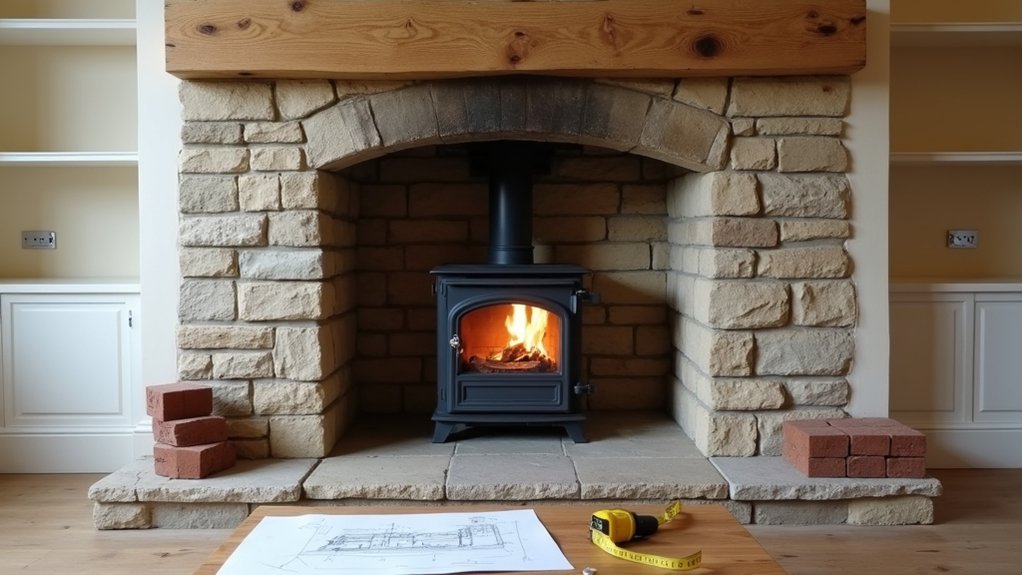
Although an inglenook can look like the heart of a stone cottage, you should keep it only if it still earns its floor space and cost. Start with a site walk-through: does it block circulation, daylight, or furniture layouts, or does it anchor the main room? Check function next—can you vent safely, meet current clearances, and run a stove or open fire without constant smoke issues?
If the chimney breast shows damp, cracking, or salts, assume remedial work and disruption. Then weigh value: will buyers in your area pay for Historical authenticity and aesthetic appeal, or do they prioritise open-plan space?
Finally, test reversibility: can you simplify surrounds while keeping the recess so future owners can restore character easily later.
What Does It Cost to Restore an Inglenook Fireplace?
Before you fall in love with exposed stone and a big oak bressumer, price the inglenook like a small structural project, not a cosmetic tweak.
Start with surveys: a chimney sweep and fireplace inspection (£150–£400) plus a HETAS/engineer visit if you’re fitting a stove (£150–£300).
Repointing and stone repairs typically run £500–£2,000, but rebuilding a failing throat or arch can jump to £2,000–£6,000.
Lining the flue is often the big-ticket item: £1,200–£3,000 depending on height and access.
A new hearth in stone or slate lands around £400–£1,500.
Add oak beam supply/fit (£300–£1,200).
Budget extra for Historical authenticity and aesthetic preservation: lime mortar, salvage stone, bespoke joinery, and careful making-good.
Will an Inglenook Fireplace Make Your Cottage Draughty?
If you keep an inglenook open or fit a stove without sorting the flue and air paths, it can absolutely pull cold air through the cottage. Any oversized throat, leaky register plate, or cracked liner turns the chimney into a big extraction fan, dragging air through gaps in floors, windows, and cupboards.
You can control it without losing Historical charm. Start with a smoke test and a camera flue check, then budget for a liner or parging where needed. Seal the throat with a properly fitted register plate, add a tight damper where suitable, and cap redundant flues.
Don’t block ventilation blindly; instead, provide a planned air route so the fireplace isn’t scavenging from the room. This keeps comfort up and protects structural integrity by reducing damp-driving airflow.
Open Fire vs. Stove Insert: What Heats Best?
Where does the heat actually go in an inglenook—into your room, or straight up the chimney? With an open fire, a lot escapes, so you’ll feel warmth close up but still run the boiler. Your fuel bill reflects poor chimney efficiency, especially in a big stone recess that needs a strong draw.
A stove insert flips that equation. It captures heat, pushes it out steadily, and lets you burn less wood for the same comfort. On site, you’ll also gain predictable performance: less fiddling with logs, fewer cold spots, and better use of the inglenook’s mass.
Budget-wise, an insert costs more upfront, but it usually pays back through reduced fuel and fewer draught complaints. If you’re keeping the look, choose a model with good glass to preserve aesthetic appeal too.
Safety, Regs, and Layout Limits to Plan For
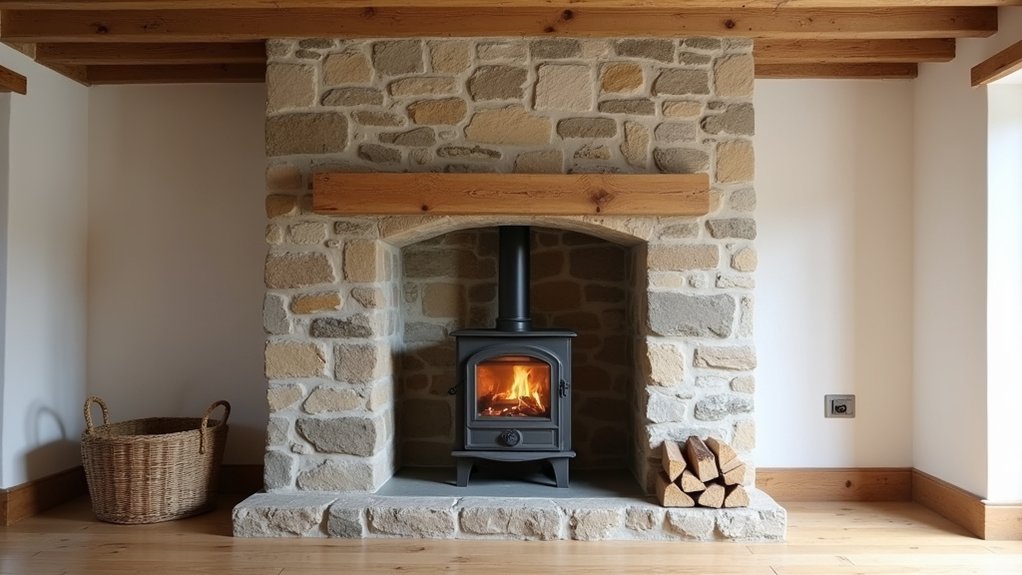
Although an inglenook feels like “just a bigger fireplace,” you’ll need to treat it like a controlled heating appliance zone, because safety clearances, Building Regs (Part J), and the existing recess geometry can quickly dictate what you can install—and how much you’ll spend to make it compliant.
Check hearth size and projection, combustible distances to the lintel, beam, and side cheeks, and whether you’ve got enough room for a stove plus shielding. Budget for a flue liner, a register plate, and carbon monoxide alarm; older chimneys often leak, pull poorly, or need extra ventilation.
If the opening is too deep or wide, you may need a gather rebuild or closure, which can reduce aesthetic appeal. Use sympathetic materials to preserve Historical authenticity while meeting testable, signed-off safety standards.
Frequently Asked Questions
Does an Inglenook Fireplace Increase a Stone Cottage’s Resale Value?
Yes, it often can: like a hearth, a heart, a handshake, you’ll signal Historical preservation and aesthetic enhancement. You’ll attract character-seeking buyers, but you must budget for safety upgrades, liner, inspection, and local demand.
Can I Install Underfloor Heating Alongside an Inglenook Fireplace?
Yes, you can install underfloor heating with an inglenook fireplace, but you’ll need heat shielding, clearances, and a compatible hearth. Budget for chimney maintenance and inspections to guarantee fireplace safety and avoid floor-system overheating.
How Do I Stop Smoke Smell Lingering in Rooms Near the Inglenook?
A stitch in time saves nine: you’ll stop lingering smoke smell by booking regular chimney cleaning, sealing gaps, and boosting draw with vents. You can add odor absorption using baking soda, charcoal, and washable curtains.
What Styles of Surround Suit Modern Interiors Without Losing Character?
Choose slim-profile surrounds in matte black steel, limewashed timber, or honed limestone; they’ll feel modern yet authentic. Keep fireplace decor minimal, and pick surround materials that match existing stone. You’ll control costs with off-the-shelf liners.
Will an Inglenook Fireplace Affect Home Insurance or Mortgage Approvals?
A stitch in time saves nine: yes, it can impact approvals if lenders/insurers flag chimney condition. You’ll boost chances with regular chimney maintenance, clear fireplace safety records, a sweep certificate, and sensible upgrades.