

A property valuation is your property’s price compass: get it wrong, and you could spend months chasing buyers or lose money on a sale. In the UK, an estate agent, mortgage surveyor, or chartered surveyor may assess your home for different reasons, using recent local sales, condition, size, and market trends. Knowing who’s valuing it, what they’ll check, and how to prepare can help you avoid costly surprises—especially when the figures don’t match.
Key Takeaways
- A property valuation estimates your home’s current UK market value, usually providing a realistic price range rather than a guaranteed selling price.
- Estate agents assess comparable local sales, property size, condition, layout, improvements, buyer demand, and current market trends.
- Free estate-agent appraisals help set asking prices, while chartered surveyors provide formal valuations for legal, tax, probate, or divorce purposes.
- A lender’s valuation protects mortgage security and differs from a survey, which investigates defects, maintenance issues, and potential repair costs.
- Prepare by tidying, completing minor repairs, improving kerb appeal, ensuring access, and gathering documents for extensions, alterations, and certificates.
What Is a Property Valuation?

A property valuation is an informed estimate of how much your home could sell for in the current UK market. It provides a realistic price range, rather than a guaranteed sale figure, by considering your property’s location, size, condition, layout, and recent comparable sales.
You can use this estimate to set an asking price, budget for your next purchase, and avoid costly overpricing or underselling. A sound valuation reflects local market trends, including buyer demand, available homes, and changing mortgage conditions.
It should also distinguish between your home’s market value and its insurance or tax value.
For better valuation accuracy, prepare details about improvements, planning permissions, lease terms, and known defects. Keep expectations realistic: presentation, timing, and negotiation can affect the final agreed price, even when the initial estimate is well supported.
Who Values Your UK Property?
Several professionals can value your UK property, but the right choice depends on why you need the figure.
For a likely sale price, ask local estate agents for market appraisals. Many offer them free because they hope to win your instruction, but compare several opinions and check their recent results in your area.
For lending, a mortgage lender usually appoints an independent surveyor to provide a mortgage valuation. You won’t normally choose this professional, and the lender’s report protects its security rather than giving you a detailed selling strategy.
For tax, probate, divorce, or other legal purposes, instruct a chartered surveyor with relevant credentials and professional indemnity insurance. These valuation experts understand formal reporting requirements and charge fees.
Always confirm the purpose, scope, fee, and report format before commissioning work, since the Property market alone doesn’t determine suitability.
How Is Your Property Valuation Calculated?
Your property valuation is usually calculated by comparing your home with recent sales of similar properties nearby, then adjusting for differences such as location, size, condition, layout, parking, outdoor space, and improvements.
The valuer may also consider current Market trends, buyer demand, local prices, and how quickly comparable homes have sold.
Different valuation methods can produce slightly different figures. An estate agent might use comparable evidence and local knowledge, while a surveyor may apply a more formal method suited to lending or legal purposes.
You can improve accuracy by providing details of renovations, energy upgrades, lease terms, and included fixtures.
Ask which comparable sales support the figure, and check whether the valuation reflects your home’s current presentation.
A realistic price can reduce delays, unnecessary price reductions, and marketing costs.
How Do Valuations Differ From Surveys?
Although both may involve an inspection, a valuation estimates a property’s market value, while a survey assesses its condition and identifies defects.
You’ll usually need a valuation for selling, remortgaging, probate, or mortgage lending. An estate agent may provide a free comparative valuation, using recent local sales, property features, and market trends.
A lender’s valuation focuses on whether the property provides sufficient security for the loan, so it may be brief and isn’t a full structural check.
You’ll commission a survey to understand potential repair costs and risks. A RICS Level 1 report offers basic condition information; Level 2 provides more detail, while Level 3 suits older, altered, or unusual homes.
A survey doesn’t confirm market value, and a valuation doesn’t reveal every defect. Choosing the appropriate service protects valuation accuracy and helps you budget realistically.
How Can You Prepare for a Valuation?

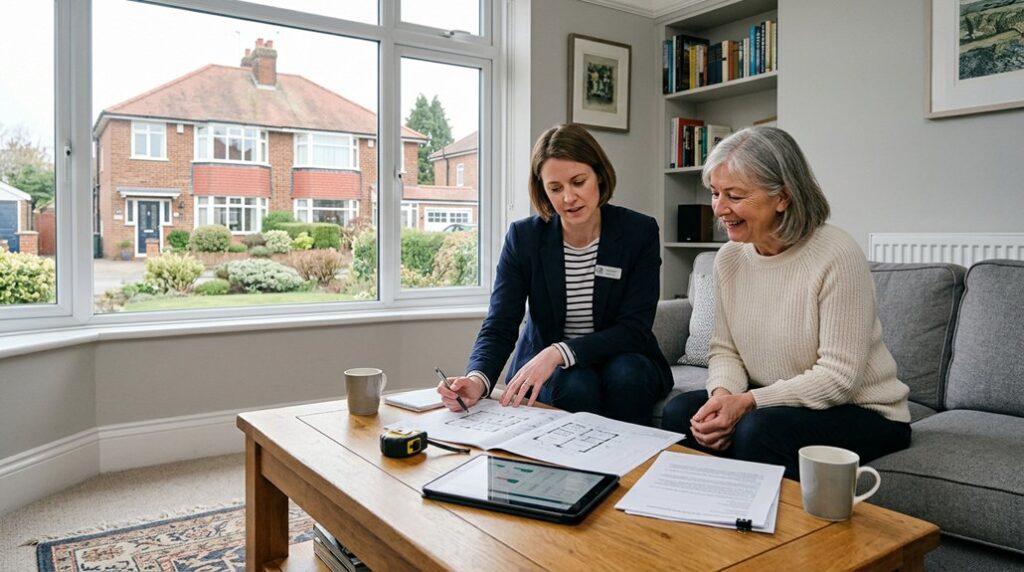
Before the valuer arrives, tidy each room, clear access to lofts, cellars, garages, and outbuildings, and complete small repairs that could affect first impressions or raise questions about maintenance.
Keep costs controlled: deep-clean kitchens and bathrooms, touch up scuffed paint, replace failed bulbs, and improve kerb appeal with simple gardening.
Don’t overspend on home staging; valuers assess the property, not temporary décor.
Prepare a concise list of improvements, including dates, invoices, guarantees, planning permissions, and building-regulations certificates.
Gather information about insulation, boiler servicing, solar panels, extensions, and lease terms.
Make every room accessible, including cupboards containing meters or heating equipment.
You needn’t follow the valuer around, but answer questions accurately and mention features that aren’t immediately visible.
Your agent’s neighborhood analysis can provide useful comparable-sales context, too.
Frequently Asked Questions
How Long Does a Property Valuation Remain Valid?
A property valuation typically remains valid for three to six months, but you shouldn’t rely on it indefinitely. Market fluctuations can reduce valuation accuracy, so reassess before selling, refinancing, or making major financial decisions.
Can I Challenge an Estate Agent’s Property Valuation?
Yes, you can challenge an estate agent’s valuation. Ask for comparable sales, review Market trends, question valuation accuracy, and obtain independent valuations. Compare fees before switching agents or commissioning a survey, ensuring your evidence supports a realistic asking price.
Does a Valuation Affect My Council Tax Band?
Usually, an estate-agent valuation won’t change your Council Tax band. Valuation impact matters only if your council reassesses the property. Check your band online, compare nearby homes, and challenge it through the Valuation Office Agency if justified.
What Happens if My Property Valuation Is Too Low?
If your property valuation is too low, don’t panic—but act quickly. Check valuation accuracy, obtain another appraisal, and review comparable sales. Then adjust pricing strategies carefully, protecting your proceeds while attracting serious buyers.
Are Property Valuations Affected by Seasonal Market Changes?
Yes, property valuations can reflect seasonal trends and broader market fluctuations. You’ll usually see stronger demand in spring, while winter may reduce buyer activity. Compare recent local sales and choose timing carefully to control costs.
Conclusion
A property valuation is your home’s financial compass, pointing towards a realistic asking price. By understanding who values it, how comparable sales influence the figure, and why a valuation differs from a survey, you’ll make better decisions and avoid costly surprises. Before the appointment, tidy, repair obvious defects, gather paperwork, and provide access to every room. With practical preparation and realistic expectations, you’ll give your valuer a clear map—and yourself a stronger route to a successful sale.