


By coincidence, you’re looking at Blackpool just as tourist demand and local occupancy are pulling in the same direction. You can still buy compact flats or terraces at prices that let you target 8–12% gross yields if you control refurb and running costs. Holiday lets can out-earn single lets in peak weeks, but you’ll manage higher turnover and tighter compliance. The real edge comes down to where you buy and how you structure it…
Key Takeaways
- Blackpool offers dual rental demand from locals and tourists, helping investors balance steady income with peak-season pricing.
- Holiday lets can outperform on income, but must be underwritten for winter dips with 20–30% off-season revenue stress-tests.
- Affordable buy-to-let stock is strongest in South Shore and Central Blackpool; tighter management is often required in lower-priced central areas.
- North Shore and heritage areas like Layton, Bispham, and Marton suit professionals and owner-occupier streets, supporting stability and resale liquidity.
- Verify licensing zones, safety certificates, and planning constraints early, budgeting £1,500–£5,000 and 4–8 weeks for compliance works.
Blackpool Investment Demand: Tourists + Locals

While some seaside towns rely on a short summer rush, Blackpool spreads demand across two distinct renter pools: year‑round locals and high‑volume tourists. You can underwrite deals with two occupancy curves, smoothing cashflow and reducing void risk versus single‑season resorts.
Local market trends show steady tenant demand from hospitality, healthcare, and education workers, supporting longer lets close to transport and town‑centre jobs.
On the visitor side, event weekends and school holidays compress bookings into premium-rate peaks, so you can price dynamically and capture higher ADR without relying on July–August alone.
Beachfront development strengthens this thesis by pulling footfall toward the promenade and improving amenity value, which supports both rent levels and resale liquidity in walkable zones.
Holiday Let vs BTL in Blackpool: Quick Decision Guide
If you’re choosing between a Blackpool holiday let and a standard BTL, start with yield vs seasonality: holiday lets can hit higher nightly rates but you’ll need strong occupancy to smooth winter dips.
While BTLs trade upside for steadier monthly cashflow.
Next, price in management time and cost—cleaning, guest turnover, and dynamic pricing can erode headline yields fast if you’re hands‑off.
Finally, factor in regulations and compliance (licensing, safety, and lender/lease rules) so you don’t buy a high‑yield asset that you can’t legally or efficiently run.
Yield And Seasonality
Because Blackpool’s demand peaks hard around school holidays, bank holidays, and event weekends, your yield swings more than it would in a standard buy‑to‑let. If you price dynamically, a holiday let can push 8–12% gross in strong months, but Seasonal fluctuations mean quieter weeks can drop occupancy sharply and drag annual returns down to 5–8% unless you fill gaps.
With a traditional BTL, you usually trade upside for Market stability: think 5–7% gross with steadier month‑to‑month cashflow, fewer void-risk spikes, and easier forecasting.
Run the maths on your realistic annual occupancy, not peak-night rates. If your strategy relies on event premiums to hit targets, stress-test with a 20–30% off‑season revenue dip and confirm you still clear costs.
Management And Regulations
Once you move past yield projections, management load and compliance rules usually decide whether Blackpool works better as a holiday let or a standard BTL.
With a holiday let, you’ll handle weekly changeovers, linen, guest messaging, and rapid property maintenance; expect 15–25% management fees or 5–10 hours/week self-managing.
You’ll also track safety: gas, electrics, fire risk, PAT testing, and tighter insurance, plus register for business rates once occupancy and availability cross thresholds.
With a standard BTL, you reduce churn and cleaning, but you can’t skip tenant screening, deposit protection, Right to Rent checks, EPC, and gas safety.
Budget 8–12% for managing agents and plan for annual compliance renewals and voids.
Blackpool Strategies: Holiday Let, HMO, or Single-Let

In Blackpool, you’ll typically see holiday lets and HMOs push higher gross yield than single-lets, but you’ll take on more moving parts and void risk.
Your decision comes down to the yield‑to‑hassle ratio: nightly rates and seasonality vs room-by-room occupancy, plus the cost of licensing, compliance, and turnaround.
You’ll also need to choose your management setup—self-manage, local agent, or specialist operator—because fees and response times can make or break the numbers.
Holiday Lets Vs HMOs
While Blackpool’s low entry prices make almost any rental strategy look viable on paper, holiday lets and HMOs win for different reasons: holiday lets can out‑earn on peak weeks if you can drive high occupancy and manage frequent changeovers, whereas HMOs often deliver steadier, contract‑style cashflow with less seasonality but more licensing, compliance, and management intensity.
If you’re targeting holiday lets, budget for Property renovation that photographs well: durable flooring, hotel‑style bathrooms, fast Wi‑Fi, and locked owner storage. You’ll also need a pricing and channel plan, plus cleaning and linen partners who can turn units around in hours.
If you’re leaning HMO, map Local amenities and transport links, then design for sharers: generous kitchens, soundproofing, and compliant fire doors. Either way, build a realistic ops model before you buy.
Yield And Risk Comparison
How do the numbers stack up when you choose between a Blackpool holiday let, an HMO, or a standard single‑let? You’ll typically chase the highest gross yield with holiday lets, but your net depends on occupancy swings and pricing power.
HMOs often deliver strong, steadier income because multiple rooms spread void risk, lifting effective yield. Single‑lets usually sit lower on yield, yet they can feel simpler and more liquid when you exit.
Risk shifts with market volatility. Holiday lets react fastest to tourism demand and seasonality; a weak summer can hit cashflow hard.
HMOs carry concentration risk in one asset, but diversify tenants.
Single‑lets track broader rental demand and interest rates.
Compare financing options: stress‑test at higher rates and model downside occupancy before you commit.
Licensing And Management Choices
Strong yields only hold up if you can legally run the strategy and manage it day‑to‑day without bleeding margin, so licensing and management should sit in the same spreadsheet as your occupancy and rate assumptions.
For holiday lets, check planning use, fire safety, and insurer requirements; then price in turnover costs: cleaning, linen, key-handovers, and platform fees that can shave 15–25% of gross.
You’ll also need tighter Property aesthetics standards, because reviews directly move ADR.
For HMOs, confirm whether the council’s additional licensing applies, then budget for compliance: alarms, doors, inspections, and higher void risk per room.
Single-lets usually win on simplicity, but don’t skimp on Tenant screening; one bad tenant can erase a year’s profit.
Decide if you’ll self-manage or pay 8–15% to protect time.
Where to Buy in Blackpool for Yields (Area-by-Area)
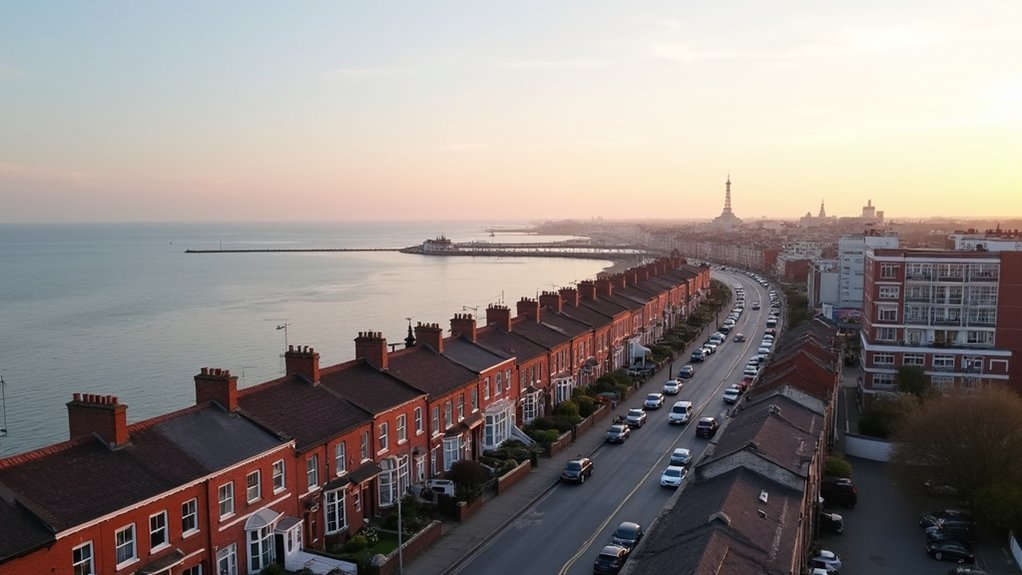
If you’re buying in Blackpool for yield, you’ll get very different numbers street by street, so it pays to target specific micro‑areas rather than the town as a whole.
Start with South Shore for year‑round demand driven by attractions and ongoing Beachfront development; you’re typically targeting compact flats and small terraces that let easily.
Central Blackpool can price low, but you’ll need tighter tenant selection and sharper management to protect downside.
North Shore suits longer‑stay professionals and quieter short breaks, especially near transport links and upgraded seafront blocks.
For stability, look at Heritage neighborhoods like Layton, Bispham edges, and parts of Marton: more owner‑occupier streets, lower churn, and better property condition.
Prioritise walkability, parking, and noise profile to match your letting strategy.
Example Numbers: Costs, Rents, Occupancy, Returns
Although Blackpool’s prices stay relatively low, your real returns come down to four moving parts you can model upfront: purchase cost (plus refurb and fees), achievable rent, realistic occupancy, and running costs (management, utilities on lets, insurance, maintenance).
Take a £95,000 terrace: budget £8,000 refurb and £4,000 fees, so you’re all-in at £107,000.
As a standard let, assume £750 pcm rent, 10% management, £600 annual maintenance/insurance: you net roughly £7,200 a year, around 6.7% on cost.
As a holiday let, model £110 per night, 45% occupancy, £3,500 annual bills/cleaning/management: you gross ~£18,000 and net ~£13,000, about 12%.
Track Market trends and stress-test Property financing rates.
Blackpool Licensing, Planning, and Key Risks
Your spreadsheet returns only hold up if the property can legally operate the way you’re modelling it, so treat licensing and planning as the next line item to price in. Check whether your street sits in a selective licensing zone, what certificates you’ll need (EICR, gas, fire safety), and any HMO triggers that change costs and timelines.
For holiday lets, confirm change‑of‑use risk and any Article 4 restrictions; a “cheap” flat can become a void if permission fails.
Stress-test downside: assume 4–8 weeks for compliance works, £1,500–£5,000 capex for safety upgrades, and 1–2 months’ rent lost during enforcement delays.
Also price demand risk: blackpool infrastructure upgrades and local amenities lift occupancy, but stag‑weekend noise, anti‑social behaviour, and seasonality can push higher management and insurance premiums.
Frequently Asked Questions
What Landlord Insurance Covers Holiday Lets Versus Standard Buy-To-Lets in Blackpool?
You’ll cover more “busy-guest” risks with holiday-let insurance: frequent turnover, contents, public liability, accidental damage, and loss-of-income. Standard buy-to-let focuses on buildings, rent guarantee, and legal expenses. Strong property management, tenant screening cut premiums.
How Do I Furnish a Holiday Let to Attract Families and Weekend Groups?
Furnish with 6–8 dining seats, a sofa bed, blackout curtains, and kid-proof storage; add Interior decor that’s wipe-clean. Provide travel cot, games, fast Wi‑Fi. Highlight Local attractions via maps, passes, and guides.
Which Mortgage Lenders Are Most Flexible for Blackpool Holiday Let Purchases?
Like a Swiss Army knife, you’ll find most flexibility with specialist holiday-let lenders and challenger banks; they’ll accept projected income, 25–30% deposits, and 125–145% cover. Tie approvals to Holiday let marketing, Local attraction partnerships.
How Does VAT Apply to Serviced Accommodation Income in Blackpool?
You’ll usually charge VAT only if your serviced accommodation turnover exceeds £90,000/year; below that, you can stay unregistered under VAT exemption rules. You must still guarantee accurate Income declaration and consider reclaiming input VAT.
What Cleaning, Laundry, and Changeover Systems Work Best for Remote Hosts?
You’ll win remotely by standardising Cleaning protocols, hiring a reliable local team, and using a checklist app. Outsource laundry management to a commercial service, track turnaround times, photo-verify finishes, and pay per changeover for predictable margins.