


Underfloor heating warms your room from the floor upward, creating consistent temperatures with fewer cold spots than conventional radiators. You’ll also gain more usable wall space, improved interior flexibility, and potential energy savings through programmable controls and zoned heating. It can suit bathrooms, kitchens, bedrooms, and larger living areas, but installation costs and floor compatibility require careful consideration. Understanding how the system works will help you decide whether its long-term benefits justify the investment.
Key Takeaways
- Provides even, comfortable warmth from beneath the floor, reducing cold spots and maintaining consistent room temperatures.
- Frees wall space by replacing radiators, allowing greater flexibility for furniture placement and interior design.
- Operates efficiently at lower temperatures, potentially reducing energy consumption and heating costs.
- Works well in living rooms, bedrooms, kitchens, bathrooms, and hallways with various floor coverings.
- Offers programmable zone controls and electric or hydronic options for tailored installation and heating requirements.
What Is Underfloor Heating and How Does It Work?

Underfloor heating warms a room from beneath the floor by circulating heat through either electric cables or water-filled pipes installed below the finished surface. You control the system with a thermostat, which regulates electrical resistance or water temperature to maintain the selected setting.
Electric systems use heating cables or mats connected to the electrical supply. Hydronic systems circulate heated water from a boiler, heat pump, or other source through a network of pipes.
Both designs transfer radiant heat upward through the floor covering, while insulation beneath the system limits downward losses.
During the installation process, you must assess floor structure, insulation, covering compatibility, electrical capacity, and system layout. You’ll also need to position sensors accurately and test the system before covering it.
Why Underfloor Heating Feels More Comfortable
Because heat rises evenly from the floor, you’ll experience a more consistent room temperature than with a conventional radiator. The system distributes radiant heat across the occupied zone, reducing hot and cold spots and limiting the temperature gradient between floor and ceiling.
You’ll also feel comfortable at a slightly lower air temperature because radiant surfaces transfer heat directly to your body. This balanced environment supports thermal comfort without the sudden blasts or localized overheating associated with forced-air systems.
Warm flooring can further improve comfort underfoot, particularly in bathrooms, bedrooms, and living areas. With concealed pipes or cables, aesthetic integration remains straightforward: you won’t see bulky emitters interrupting your room’s design.
You’ll enjoy a calmer, more uniform atmosphere, while precise controls let you adjust comfort for each zone and routine.
How Underfloor Heating Saves Wall Space and Energy
By replacing radiators and other wall-mounted emitters, this heating system frees usable wall space for furniture, storage, and interior design. You gain greater Wall space optimization because concealed pipework or electric elements distribute heat without occupying vertical surfaces. That flexibility can simplify layouts and reduce restrictions when positioning cabinets, shelving, or artwork.
Underfloor heating also delivers measurable energy efficiency benefits. It operates effectively at lower flow temperatures than many conventional radiator systems, so your boiler or heat pump may use less energy to maintain the required room temperature.
Heat spreads across the floor, creating a consistent radiant output and reducing hot and cold zones. When you add programmable controls, floor sensors, and zoned thermostats, you can tailor operation to your schedule and avoid unnecessary heating.
Proper insulation beneath the system further limits downward heat loss, improving performance and reducing running costs over time.
Which Rooms Suit Underfloor Heating Best?
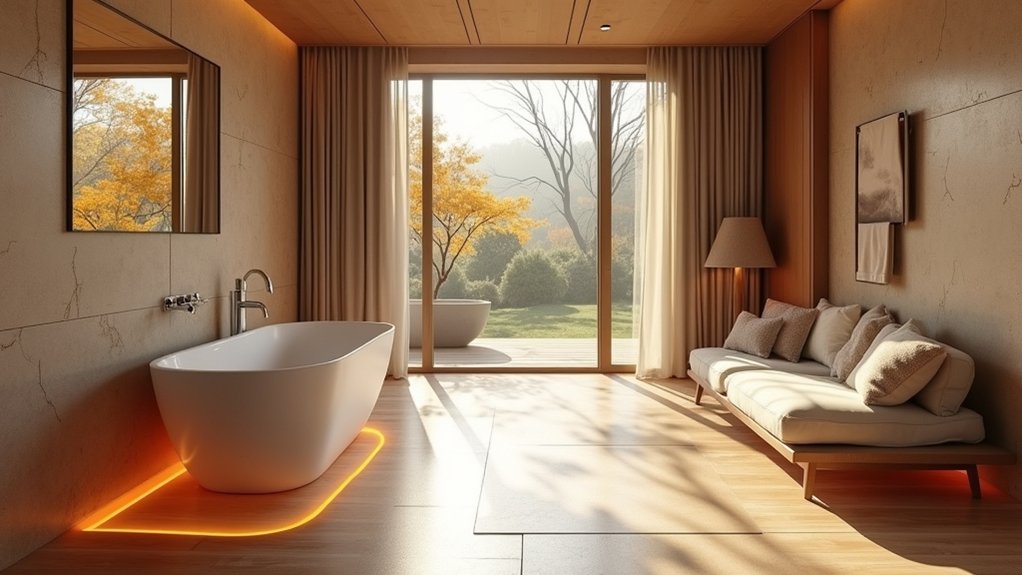
The best rooms for underfloor heating are those where consistent, evenly distributed warmth improves comfort and layout flexibility, including living rooms, bedrooms, kitchens, bathrooms, and hallways.
In living areas and bedrooms, low-temperature radiant heat maintains comfort without occupying wall space or creating noticeable air movement.
Kitchens and bathrooms benefit particularly because tiled floors transfer heat efficiently and provide welcome warmth underfoot. Tile durability makes these surfaces suitable for regular temperature changes when you install and control the system correctly.
Hallways also suit underfloor heating, as they often experience frequent foot traffic and connect multiple zones.
You can combine electric systems with smaller renovation areas, while hydronic systems typically suit larger spaces.
Aesthetic versatility remains another advantage: you can choose tile, stone, engineered wood, or approved laminate while preserving your room’s design.
How Much Does Underfloor Heating Cost?
Several factors determine how much underfloor heating costs, including the system type, heated area, subfloor preparation, insulation, controls, and chosen floor finish.
Electric systems typically cost less to install because they use thinner heating mats or cables, making them suitable for renovations and smaller rooms.
Hydronic systems generally require a higher initial investment for pipes, manifolds, pumps, and a compatible heat source, but they can deliver lower running costs across larger areas.
Your cost comparison should include equipment, professional labour, floor removal, screeding, electrical upgrades, and commissioning.
Installation considerations also include insulation thickness, floor height, heat-loss calculations, and thermostat zoning.
You’ll usually reduce operating costs by improving insulation and using efficient controls.
Ask installers for itemised quotations, projected energy consumption, warranties, and maintenance requirements before choosing a system.
Frequently Asked Questions
Can Underfloor Heating Be Installed Beneath Existing Flooring?
You can install underfloor heating beneath some existing flooring, but you’ll need to verify flooring compatibility, system thickness, insulation, and heat resistance. Installation challenges include lifting surfaces, adjusting doors, and ensuring electrical or plumbing safety.
How Long Does Underfloor Heating Typically Take to Warm a Room?
You’ll typically feel warmth within 30–60 minutes, though complete room heating may take 2–3 hours. Thermal response depends on flooring and system type; optimize Heating efficiency with insulation, controls, and continuous operation.
What Maintenance Does an Underfloor Heating System Require?
You’ll typically need little maintenance: inspect thermostats, test sensors, and check electrical or hydraulic connections annually. For example, you might flush hydronic loops periodically. Professional servicing preserves energy efficiency, while installation costs remain unaffected afterward.
Can Underfloor Heating Be Controlled Remotely or Integrated With Smart Home Systems?
Yes, you can control underfloor heating remotely through smartphone apps, tablets, or web portals. Smart home integration connects thermostats with Alexa, Google Home, or automation platforms, while Remote control features enable scheduling, monitoring, and adjustment.
Is Underfloor Heating Safe for Children, Pets, and Allergy Sufferers?
Yes—but check Safety concerns first. You’ll find underfloor heating generally safe for children, pets, and allergy sufferers: regulated surface temperatures prevent burns, while no forced-air circulation reduces dust. Allergic reactions remain unlikely with proper maintenance and ventilation.
Conclusion
Underfloor heating delivers even, efficient warmth while freeing your walls from bulky radiators. You’ll feel fewer cold spots, gain flexible furniture placement, and control comfort through programmable zones. It suits bathrooms, kitchens, bedrooms, and well-insulated living areas, although installation costs vary by system and floor construction. A useful benchmark: radiant floors can operate at lower water temperatures than conventional radiators, improving heat-pump efficiency. By pairing correct insulation with professional design, you’ll maximize comfort, energy savings, and long-term value.