
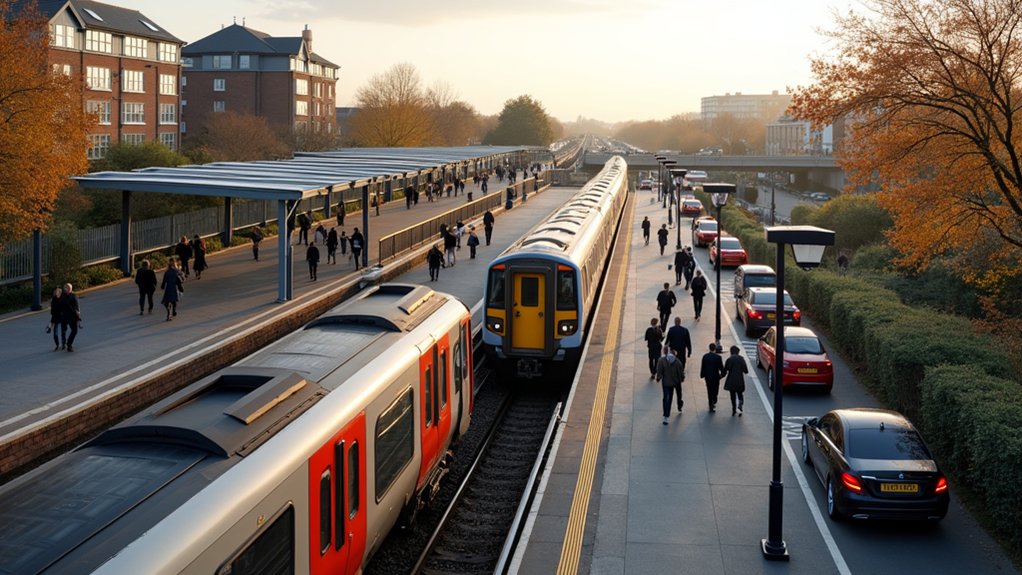

You’re only about 35–55 minutes from London by direct train from Three Bridges, and Gatwick is often 8–10 minutes away, which keeps buyer and tenant demand consistently liquid. You can price in shorter commutes, wider employer access, and fewer void periods, then benchmark yields against nearby Crawley streets. Add M23/M25 connectivity and you’ve got a location where time savings convert into rent strength—but the real ROI difference shows up block by block…
Key Takeaways
- Direct Thameslink and Southern trains reach Central London in roughly 35–55 minutes, supporting strong commuter-driven buyer and rental demand.
- Gatwick Airport is 8–10 minutes by train, attracting airport staff tenants and boosting occupancy stability.
- Reliable rail, bus, and road options reduce vacancy risk by fitting shift work, school runs, and flexible travel needs.
- Walkable homes near the station and amenities typically achieve higher rents and faster resale due to convenience and footfall.
- Easy M23/M25 access appeals to drivers, helping maintain demand and stabilise yields through changing market conditions.
Three Bridges Transport: Why Demand Stays High

Why does demand for transport in Three Bridges stay consistently high? You’re buying into a commuter catchment where reliable connections widen your tenant and buyer pool.
When journey options are flexible—rail, bus, and road—you reduce vacancy risk because renters can match shifts, school runs, and airport access without owning two cars. That mobility supports stronger achievable rents and faster resale, especially for homes within a short walk of key routes.
You also benefit from local amenities that keep everyday spend nearby, cutting “last‑mile” friction that deters tenants. Add community events that pull footfall to pubs, cafés, and parks, and you get higher dwell time and repeat demand.
Transport isn’t a feature here; it’s a yield stabiliser.
Three Bridges Station to London: Times, Trains, Costs
From Three Bridges Station, you can reach central London in roughly 35–55 minutes depending on the service and stop pattern, so you can price your commute time into work and rental decisions.
You’ll typically choose between Thameslink and Southern, then optimise ROI by matching Off-Peak, Super Off-Peak, or Season tickets to your travel frequency.
Next, you’ll compare headline fares, Railcard discounts, and contactless/Oyster eligibility to cut monthly costs without sacrificing flexibility.
Journey Times To London
Although Three Bridges sits just outside Crawley, you can reach central London quickly and predictably by rail: direct Thameslink services typically get you to London Bridge in around 40–50 minutes and to London Blackfriars/Farringdon in roughly 50–60 minutes, with frequent departures across the day that keep waiting time low.
That reliability shortens your door-to-desk window, so you can price rentals for commuters who won’t accept uncertainty. Peak-hour stopping patterns stay consistent, while off-peak options still run often enough to support hybrid schedules.
You’ll also keep Brighton, Gatwick, and other Sussex hubs within easy reach, widening your tenant pool. Faster journeys mean you can work in London, then spend evenings on local cuisine and community events—an amenity mix that boosts retention and reduces voids.
Train Fares And Tickets
If you’re modelling commuter demand and cashflow, you’ll want hard numbers on Three Bridges–London fares as well as journey times: Thameslink runs frequent direct services to London Bridge/Blackfriars/Farringdon, and ticket costs typically hinge on peak vs off‑peak travel, whether you choose flexible Anytime/Off‑Peak returns, pay‑as‑you‑go contactless, or lock in a season ticket.
For many renters, PAYG caps and off‑peak pricing can materially cut weekly spend versus daily returns, lifting affordability and widening your tenant pool. Season tickets suit 4–5 day commuters and support steadier, higher rents by de‑risking travel costs.
Encourage tenants to compare Railcard eligibility, peak boundaries, and split‑ticket options. Saved minutes and pounds often get reinvested into Local dining and community events, strengthening neighbourhood stickiness and reducing voids.
Three Bridges to Gatwick: Fastest Routes for Shifts
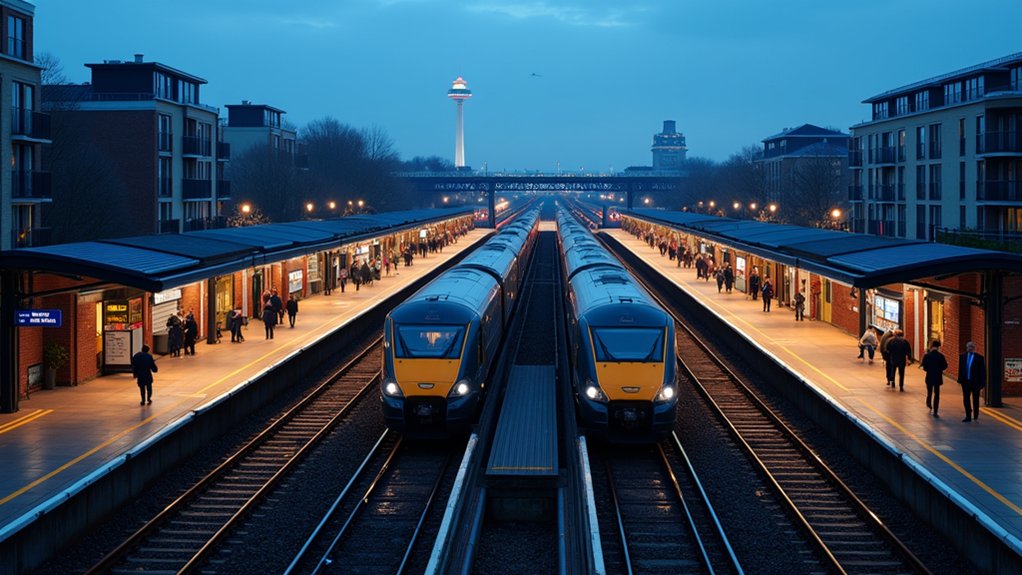
How quickly can you get from Three Bridges to Gatwick for an early start or late finish? You’ll typically reach Gatwick Airport in about 8–10 minutes by direct train, with frequent services across the day.
That reliability cuts shift-risk: fewer late arrivals, less need for costly airport-adjacent rent, and stronger tenant demand from aviation, logistics, and hospitality workers.
If you’re buying to let, that short, predictable hop supports premium occupancy and reduces voids, improving cashflow resilience.
You can also stack lifestyle value: grab local cuisine in Crawley or near the station after work, then reset with outdoor activities around Tilgate Park or Worth Way on days off.
For you, it’s time saved and rentability boosted.
Driving From Three Bridges: M23/M25 and Peak Traffic
With the M23 on your doorstep and the M25 one junction away, driving from Three Bridges gives you fast access to Gatwick, Brighton, and the wider South East—but peak traffic dictates the real ROI.
Off-peak, you can hit Gatwick in ~10 minutes and Brighton in ~35–45 minutes; in the 7–9am and 4–6:30pm peaks, add 15–30 minutes, especially at M23 J10–J8 and the M25 merge.
That time cost translates into fuel burn, lateness risk, and lower tenant satisfaction, so price in a buffer and prioritise properties with easy A23/M23 slip-road access.
You’ll also monetise convenience: quick drives to local cuisine spots and community events keep weekends car-light, improving retention and reducing voids.
Who Buys in Three Bridges (and What They Choose)
In Three Bridges, you’ll see three main buyer groups driving demand: London/Crawley commuters chasing time savings, young families prioritising schools and space, and investors targeting reliable lettability near the station and business hubs.
Your ROI hinges on matching motivation to stock—period terraces and modern flats win for commute-led buyers, while 3–4 bed semis and detached homes capture family budgets and longer holding periods.
You’ll choose faster-turnover flats for yield-led strategies or family houses for steadier capital growth and lower void risk.
Buyer Profiles And Motivations
Although Three Bridges sits on the edge of Crawley, buyers don’t treat it as “overflow” housing—they choose it for commute efficiency, predictable rental demand, and better value-per-square-foot than many nearby postcodes.
If you’re a London or Gatwick commuter, you buy here to cut journey friction and protect resale liquidity.
If you’re an investor, you target stable tenant pools from airport, Manor Royal, and hospital employment, aiming for low voids and strong yield resilience.
If you’re upsizing locally, you’re motivated by schools, green space access, and day-to-day convenience without paying Horsham premiums.
You also value stickiness: local history gives the area identity, while community events improve retention and reduce churn—both measurable drivers of long-run ROI and fewer reletting costs overall.
Preferred Property Types
Because Three Bridges runs on commuter logic and employment-led demand, the property types that perform best here skew toward low-friction, high-liquidity stock: modern 1–2 bed flats near the station for investors chasing consistent lets, 2–3 bed terraces and semis for buyers who want school catchments plus resale depth, and a smaller but premium slice of larger detached homes for upsizers who’ll pay for space without Horsham’s price tag.
If you’re yield-led, prioritise newer blocks with lifts, parking, and low void risk; target walking-distance to rail and Manor Royal.
If you’re buying to live, terraces on quieter streets price efficiently and rent well later.
For value-add, choose dated semis where a loft, EPC upgrades, and a sharper kitchen boost resale.
Proximity to local dining and community events underwrites tenant retention.
Three Bridges Rentals: Tenant Demand, Rents, Yields
As you weigh Three Bridges against other West Sussex rental hotspots, you’ll find tenant demand stays structurally strong thanks to fast rail links into London, Gatwick-driven employment, and steady local regeneration—factors that typically translate into shorter voids and more predictable cash flow.
You can typically target young professionals and airport-linked households who prioritise walkable local amenities, reliable trains, and a safe neighbourhood feel. That broad tenant pool supports consistent rent growth when you keep specs competitive: modern kitchens, EPC upgrades, and strong broadband.
To protect yields, you’ll want tight cost control on service charges, planned maintenance, and compliant licensing where applicable. Add value by furnishing for sharers, allowing pets, or bundling utilities.
Promote community events and green space access to lift retention, reducing reletting fees and vacancy drag.
Three Bridges Prices vs Crawley: Where Value Sits
A quick price-per-square-foot comparison usually places Three Bridges at a premium to wider Crawley, and that spread tells you where the market assigns “commuter convenience” value. You’re typically paying more for shorter station access and faster London/Gatwick journeys, which can protect downside in softer cycles.
To judge value, you’ll want to model the premium against rent growth and void risk: if the uplift in achievable rent and tenant retention offsets higher entry price, your yield compression becomes acceptable. Watch sold-price velocity and the ratio of asking to achieved price; tighter gaps often signal resilient demand.
Factor in Local amenities as revenue support, not lifestyle fluff—nearby retail, gyms, and services lift letting speed. Add community events to your tenant profile analysis; they correlate with longer stays and lower churn.
Best Areas in Three Bridges: Walkability, Schools, Noise
Three Bridges doesn’t reward a “one-postcode-fits-all” buy: walkability to the station and daily amenities typically drives faster lets and tighter voids, school catchments influence tenant length-of-stay, and rail/A23 flight-path noise can widen your buyer–tenant discount if you misprice it.
If you target young professionals, you’ll do best within a 10–12 minute walk of the station and retail core: you’ll reduce car dependence, lift rent resilience, and keep turnover costs down.
For families, prioritise streets feeding reputable primaries; longer tenancies can offset slightly higher entry prices.
Stress-test noise: stand outside at peak rail times, check A23 proximity, and price in glazing or insulation as a capex value-add.
Balance yield with lifestyle pull—Local dining in Crawley town centre and outdoor activities at nearby parks help marketing and renewals.
Frequently Asked Questions
What Council Tax Bands Apply to Homes in Three Bridges?
You’ll find Local council tax bands A–H apply to homes in Three Bridges, set by 1991 property valuation zones. Check your band on Crawley Borough Council’s portal to forecast annual charges and refine ROI projections.
Are There Planned Developments or Regeneration Projects Near Three Bridges Station?
Yes—you’ll see planned development around Three Bridges station; it’s a growing garden. You can track council and Network Rail proposals: new homes, public sphere, Local shopping centers upgrades, Nearby recreational facilities, boosting yields, resale value.
How Reliable Is Local Mobile and Broadband Coverage in Three Bridges?
You’ll typically get strong Mobile coverage and solid broadband speeds in Three Bridges, with 4G/5G options and fibre in many streets. You’ll reduce void-risk, support WFH tenants, and sustain rents—verify postcodes via Ofcom/SamKnows.
What Flood Risk Zones Affect Properties Around Three Bridges?
You’ll mainly face Environment Agency Flood Zones 2 and 3 along river corridors; most higher ground sits in Zone 1. Use historical flood data and commission Flood prevention surveys to protect ROI and pricing.
Which GP Surgeries and NHS Dentists Are Accepting New Patients Locally?
You can check local GP surgeries and NHS dentists by using the NHS “Find a GP” and “Find a dentist” tools; you’ll filter by “accepting new patients,” compare wait times, and confirm dental practice availability for ROI.