
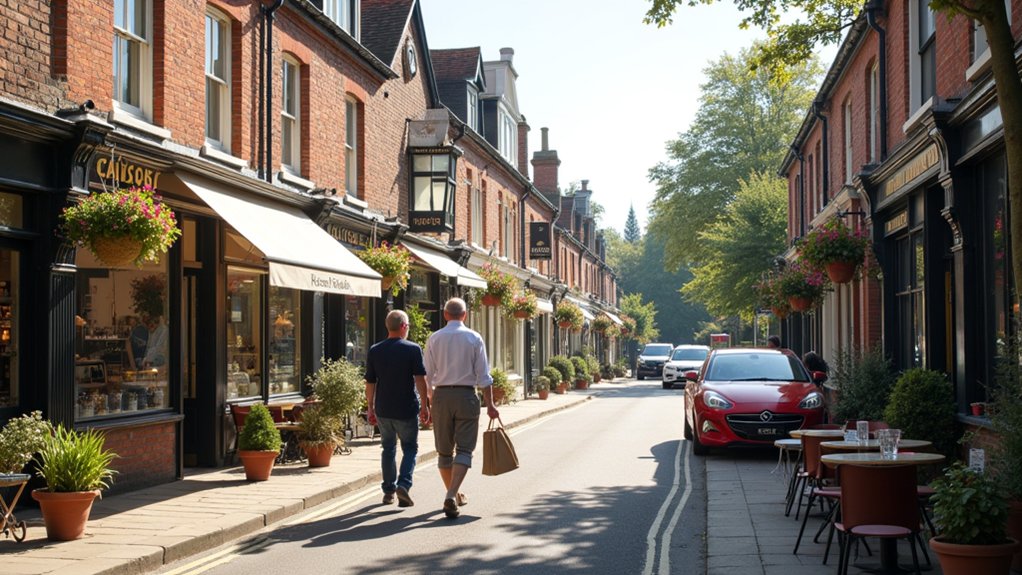

If you’re looking to sidestep London prices without sacrificing London access, Berkhamsted gives you a cleaner route to ROI. You can bank on fast Euston trains, tight local supply, and buyer demand anchored by strong schools and a walkable, high-spend high street. The stock mix—period cottages to family semis—lets you match yield to capital growth. The real edge, though, depends on which micro-area you target and why.
Key Takeaways
- Fast rail to London Euston and strong road links boost demand, rent stability, and resale liquidity for Berkhamsted homes.
- Excellent schools, safe streets, and walkable amenities attract long-term tenants and owner-occupiers, supporting consistent pricing power.
- Period homes near the High Street command premiums, while 1–3 bed flats and terraces stay highly liquid and quick to let.
- Micro-location matters: station, High Street fringe, canal, and castle areas typically sell faster and draw lifestyle-driven buyers.
- De-risk purchases by budgeting for fees and CapEx, checking leases and service charges, and using sold comparables to secure adequate discounts.
Why Berkhamsted Feels Close to London (Commute + Access)

Because commute time drives demand (and pricing power), Berkhamsted punches above its weight for London-linked buyers: you get a fast, reliable rail connection into Euston plus straightforward road access via the A41/M25, which keeps the town firmly in the “viable daily commute” bracket.
That frictionless access widens your tenant and resale pool: London workers can live farther out without sacrificing weekdays, supporting tighter void periods and stronger achievable rents. You’ll also see liquidity benefits—buyers pay a premium for predictable journey times, so pricing holds up better in slower markets.
On weekends, you still capture spend locally; boutique shopping and local art create a destination high street that draws discretionary footfall, strengthening the town’s “stay local” appeal without needing London every day. Connectivity underwrites demand; amenities compound it.
Berkhamsted Schools, Parks, and Everyday Life
Why does Berkhamsted hold onto demand even when wider markets soften? You’re buying into day-to-day fundamentals that keep tenant and buyer interest resilient: strong schools, safe streets, and walkable routines that reduce churn. You can point families to well-regarded state and independent options, then back it up with parks, sports clubs, and the Grand Union Canal paths for year-round, low-cost leisure.
These amenities shorten “time-to-settle,” which helps protect void periods and supports renewal premiums.
You’ll also benefit from a high-frequency town calendar—community events, markets, and seasonal fairs—that keeps footfall consistent and independent traders healthy. Add credible local cuisine along the High Street, plus cafés that suit hybrid workers, and you’ve got lifestyle liquidity: people want to stay, recommend, and re-sign.
Berkhamsted Property Types and What Drives Prices
Those day-to-day fundamentals show up directly in what buyers and tenants will pay, and Berkhamsted’s pricing largely comes down to micro-location and stock type. You’ll see the strongest premiums on period character with walkable convenience, while generic stock needs sharper pricing to compete.
For yield, you’ll typically target 1–3 bed flats and compact terraces: they’re liquid, easier to refurb, and rent fast.
For capital growth, you’ll pay up for family semis and detached homes with parking, gardens, and scope to extend, because buyers price future upside.
Luxury cottages command outsized £/sq ft when they’re turnkey and photogenic.
Historic estates trade on rarity, but you’ll budget for maintenance, listed-consents, and longer resale timelines to protect ROI.
Where Demand Is Strongest in Berkhamsted (By Micro-Area)
While Berkhamsted looks compact on a map, demand (and resale speed) shifts sharply by micro-area, so your ROI depends on buying the right streets, not just the right postcode.
Closest to the station (and the town-centre walk) you’ll see the deepest buyer pool: London commuters and downsizers pay for time-savings, keeping liquidity high.
The High Street fringe—easy access to local dining and weekend footfall—tends to outperform on short resale windows.
Castle-side and the canal corridor draw lifestyle-led buyers who still act fast when period stock appears, helped by scenery and cultural events.
On the west side and quieter cul-de-sacs, demand skews family-led; you’ll rely more on school-catchment sentiment, so pricing gets sensitive to condition and plot size.
Track days-on-market street by street.
How to Buy in Berkhamsted (Costs, Risks, Strategy)

Street-level demand tells you where liquidity sits; the next step is structuring your purchase so fees, financing, and execution risk don’t erode that upside.
Budget for stamp duty, legal fees, surveys, lender valuation, and immediate capex; price these into your yield and exit IRR.
If you’re targeting luxury apartments, scrutinise service charges, reserve funds, cladding/EWS1 status, and lease length—these can hit refinanceability and resale speed.
For historic cottages, prioritise damp, roof, and conservation constraints; get specialist surveys and confirm insurability.
De-risk by securing a mortgage agreement in principle, stress-testing rates, and negotiating completion timelines.
Use comparable sold data, not asking prices, and only proceed when the discount covers your worst-case scenario and downtime risk.
Frequently Asked Questions
Is Berkhamsted in a Conservation Area, and What Are Planning Restrictions?
Yes—parts of Berkhamsted sit within conservation areas. You’ll need consent for alterations affecting Historic architecture; stricter design, materials, and demolition controls apply. Check Dacorum policies and Local conservation efforts early to de-risk ROI.
What Are Typical Council Tax Bands and Annual Costs in Berkhamsted?
You’ll typically see council tax Bands C–H in Berkhamsted, with annual Property tax roughly £1,800–£3,800+, depending on valuation and Local government rates. Model this fixed cost into yields and ROI, alongside service charges.
How Reliable Is Broadband and Mobile Coverage Across Berkhamsted?
Worried you’ll lose signal? You won’t: Berkhamsted’s Digital infrastructure is generally solid, with fast fibre in many streets and dependable Mobile network coverage on major carriers. You’ll still spot weaker pockets near hills and older builds.
What Flood Risk or Environmental Issues Should Buyers Check in Berkhamsted?
Check flood risk maps, historic claims, and local drainage; confirm Flood prevention measures like SuDS and maintained culverts. Review Environmental conservation policies, protected areas, and contamination records—they affect insurability, renovation scope, and resale premiums.
Are There Major Regeneration Projects Planned That Could Affect Property Values?
Yes—track planned works closely: UK homes near major transport improvements can uplift ~5–10%. You should monitor Urban redevelopment proposals and Infrastructure upgrades (roads, rail, town-centre schemes), because construction disruption and new amenities can reprice demand.