
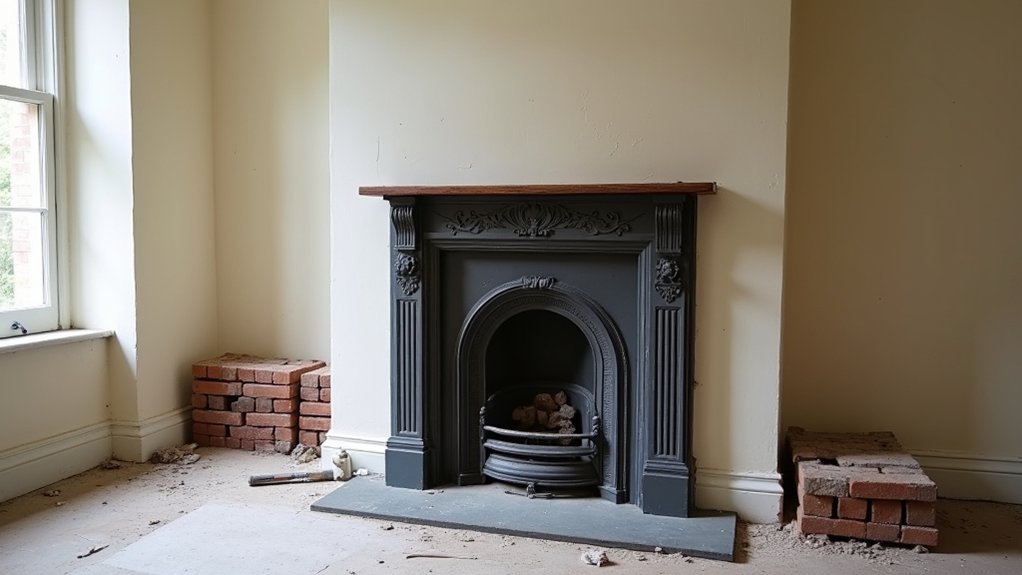

That old period fireplace can be the campfire at the center of your renovated home, but it can also be a money pit. You’ve got to weigh charm against draft control, liner condition, and current code. A quick inspection can tell you if you’re keeping it, restoring it, or swapping in an insert for real heat. The tricky part is where the costs hide—and how to spot them before you commit…
Key Takeaways
- Assess whether the fireplace is structurally sound, historically valuable, and worth keeping before any demolition or insert installation.
- Get a certified chimney sweep or HETAS/Gas Safe engineer to inspect and smoke-test the flue, chimney, and ventilation.
- Confirm hearth dimensions, clearances, and fuel rules meet current building codes and any conservation area restrictions.
- Compare costs and performance: restoration typically £800–£2,500, while replacement often £1,500–£5,000 with higher efficiency.
- Consider a discreet insert (wood, gas, or electric) to improve heat output while retaining the original surround and proportions.
Period Fireplace Decision Checklist (Keep, Restore, Replace)
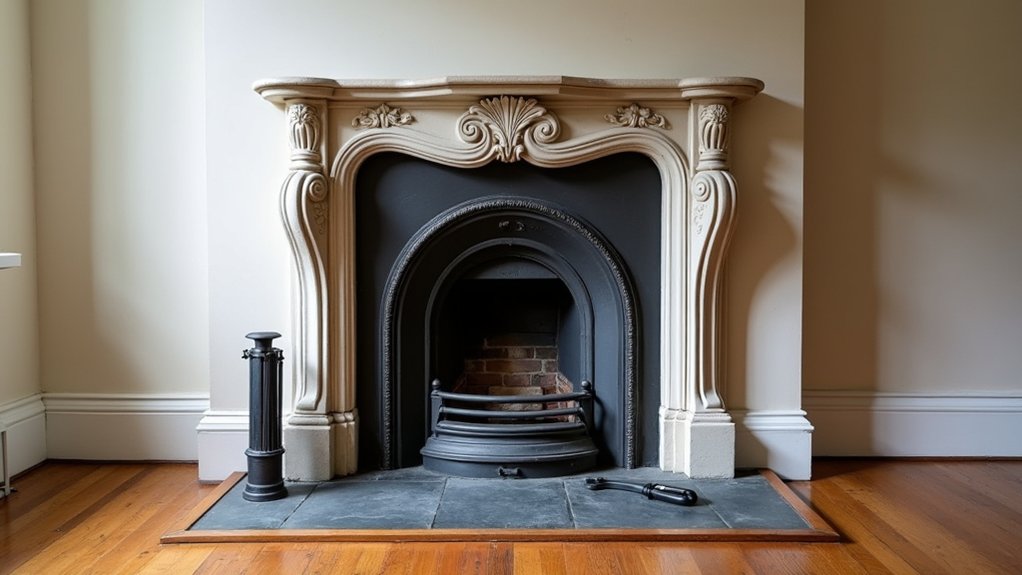
Before you start ripping out masonry or pricing new inserts, run your period fireplace through a simple keep/restore/replace checklist: check the chimney and flue for cracks or leaks, confirm the hearth and clearances meet current code, and weigh repair costs against the heat you’ll actually get for your space.
If it’s structurally sound and you value Historical authenticity, keep it and tune it for occasional ambiance after a long day outside.
If the surround’s worth saving but the firebox is tired, restore: repoint, patch, and add a discreet damper or doors for Modern integration without losing character.
If it’s oversized, drafty, or expensive to revive, replace with a sealed insert sized to your room, so you burn less wood and haul fewer loads.
Price fuel, labor, and maintenance before you decide.
Can You Keep It Safely? Condition, Regs, Inspections
Once you’ve decided whether you’ll keep, restore, or replace the fireplace, make sure the one you’ve got can run safely under today’s rules. Start with a close look: cracked firebrick, spalling stone, loose hearth slabs, or a leaning Decorative mantel can signal heat damage or movement. Check the flue route outdoors too—missing cowl, failing flashing, or crumbling stack joints let rain and downdrafts in.
Next, verify compliance: your local building control, conservation area limits, and fuel rules may require a suitable liner, ventilation, and carbon monoxide alarm. Don’t guess—book a certified chimney sweep or HETAS/Gas Safe engineer for a camera flue inspection and smoke test. Keep receipts and a written report for insurers.
Choose fireplace accessories rated for heat, and keep combustibles well clear.
Period Fireplace Restoration vs Replacement: Costs and Trade-Offs
Although a period fireplace can look like the soul of the room, you’ll get the best renovation value by weighing restoration against replacement in plain pounds and practical performance.
Restoration usually means sweeping, repointing, new liner, and repairing the surround; budget roughly £800–£2,500, more if the chimney’s failing. You keep heritage character, but you may still lose heat up the flue and rely on modern heating for real comfort.
Replacement can run £1,500–£5,000 including opening up, rebuilding the throat, and a new flue route. You’ll often gain better energy efficiency, quicker warm-up, and fewer windy downdraught headaches on exposed sites.
Choose restoration if the structure’s sound and you value authenticity; choose replacement if you need predictable warmth and lower running costs.
If You Keep It: Period Fireplace Design and Insert Options
If you’re keeping the original surround and opening, you can still make the fireplace work harder by choosing an insert that suits how you actually heat the room.
For occasional ambiance after a day outdoors, a small wood-burner insert gives real flame with better control than an open grate. If you want cheaper, cleaner heat, a gas insert offers quick starts and steady output without hauling logs or storing kindling.
For tight budgets, a high-efficiency electric insert can slip in with minimal disruption and no flue work.
Keep Historical authenticity by retaining the mantel, tile, and proportions; let Modern integration happen behind the opening with a liner, sealed door, and discreet vents.
Always size the insert to room volume and existing chimney draw.
Frequently Asked Questions
Will Keeping the Original Fireplace Affect My Home Insurance Premium?
Keeping the original fireplace can raise your premium slightly if it increases fire risk. You’ll cut fireplace costs by maintaining it, adding liners, and documenting upkeep, helping avoid insurance claims when you burn outdoors.
Does Retaining the Fireplace Increase Property Value for Future Resale?
Yes, retaining it can boost resale value, especially if your fireplace design looks authentic and supports historic preservation. You’ll attract buyers who want cozy indoor-outdoor gatherings, and you won’t spend as much replacing features.
Can I Legally Sell or Salvage the Old Fireplace if I Remove It?
Sure, you can sell or salvage it—because nothing says “heritage” like hauling it outdoors. But check Historical preservation rules and renovation regulations first; permits, listed status, and disposal laws can block resale. Document everything.
How Do I Match the Fireplace Style to My Home’s Architectural Period?
Match your fireplace design to your home’s era by copying typical mantel proportions, materials, and surround details for architectural harmony. You’ll save money sourcing reclaimed stone/brick locally, and you should test fit outdoors before installation.
What Ongoing Maintenance Will a Period Fireplace Require Each Year?
An ounce of prevention beats a pound of cure: you’ll schedule annual chimney cleaning, inspect the flue and cap after storms, sweep ash, check for cracks, and plan periodic hearth restoration to prevent moisture damage. Keep costs down.