
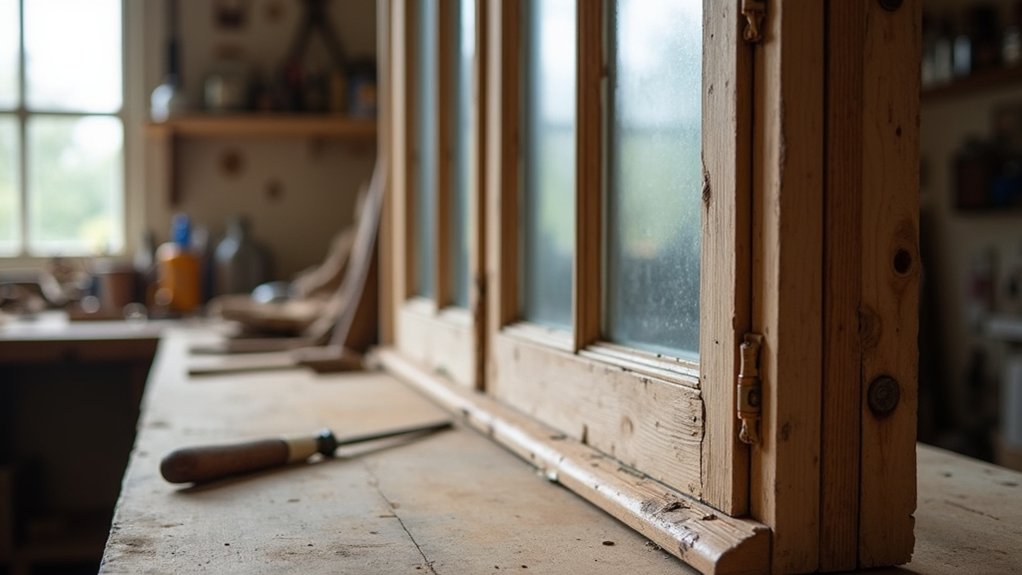

By coincidence, you’ll spot the worst sash window restoration issues right after a wet, windy week outside. You’ve got a choice: patch up original timber to keep period character and save money, or replace frames that are too soft, racked, or rotten to hold paint and glass. Your budget, the site’s exposure, and local conservation rules all push the decision. Next, you’ll want a fast checklist that tells you which way to go…
Key Takeaways
- Decide your priority: preserve historic authenticity with repair, or maximize comfort, security, and insulation with replacement.
- Probe sills and rails on a dry day; firm timber with shallow rot is usually repairable.
- Replace when rot runs deep in stiles, joints won’t tighten, or the box frame is racked and weights can’t run true.
- Compare cost per year: repairs are cheaper upfront (10–20 years), replacements cost more but can last 20–40 years.
- Check planning rules; listed and conservation areas often require like-for-like profiles, with reversible upgrades like brush seals or secondary glazing.
Repair or Replace Sash Windows: Quick Checklist
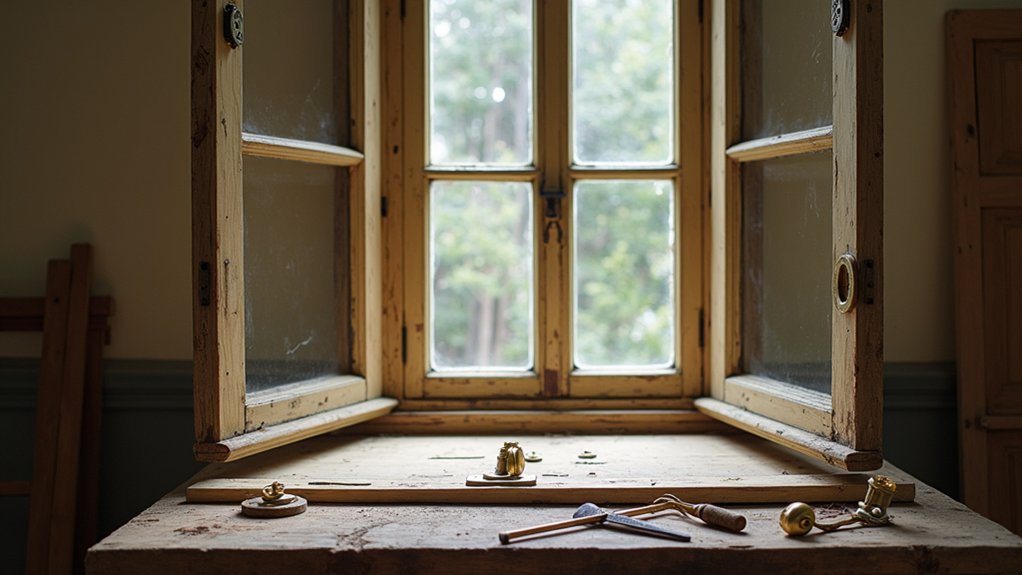
If you’re staring at a rattly sash and wondering whether it’s worth the effort, run through a quick checklist before you spend money.
First, set your goal: Historical accuracy or maximum performance. If you need the period look for a listed home, prioritize repair options that keep original profiles and glass.
Next, check your climate exposure: driving rain, coastal salt, and hard sun punish joints and paint; choose the path that boosts Material durability.
Then price it like a field job: tally access (ladders, scaffolding), lead paint precautions, and time off work. Compare that to a like-for-like timber replacement, not cheap softwood.
Finally, consider comfort: if you can’t meet insulation, security, or ventilation needs, replacement may pencil out better long term.
Sash Window Repair: Signs the Frames Are Salvageable
Before you budget for new joinery or a full swap, check whether your sash frames still have solid “bones” that make repair worth the labour. Start outside on a dry day: probe the sill, bottom rails, and meeting rails with a sharp awl.
If timber feels firm after the paint line and rot’s shallow, you can splice and consolidate. Look for tight joints, straight stiles, and glazing bars that haven’t twisted; minor gaps usually take resin, pins, and clamps.
If the box frame sits square in the reveal and the weights still run, you’re ahead. Hairline splits, rattles, and stuck sashes often come from worn beads or paint build-up, not failure.
Repair keeps Historical accuracy and supports craftsmanship preservation.
Replace Timber Sash Windows: When It’s the Better Call
Although you can rescue many original sashes with splices and resin, replacement makes better sense when the timber’s gone soft deep into the stiles, the joints won’t pull tight, or the box frame has racked so badly the weights and pulleys can’t run true.
If you’re seeing widespread wet rot around the cill, crumbling glazing bars, or repeated paint failure after a winter of driving rain, you’ll waste weekends patching a losing battle.
Choose like-for-like profiles to keep Historical accuracy, especially on street-facing elevations. You can still upgrade quietly: specify Modern materials such as laminated engineered timber, upgraded draught seals, and toughened glass where permitted.
Replace in a dry spell, protect exposed reveals with tarps, and prime all end grain before the next storm hits.
Sash Window Repair vs. Replacement: Costs and Lifespan
When the rain’s coming in sideways and your heating bill keeps climbing, the repair-or-replace decision comes down to two numbers: what you’ll spend now and how many solid years you’ll get back.
A targeted repair—splicing rotten sills, re-cording weights, easing sticking sashes, sealing gaps—usually costs less upfront and can buy you 10–20 years if you keep paint and putty maintained. It also protects Historical accuracy when the original joinery’s still sound.
Full replacement costs more, but it can deliver 20–40 years of service, especially if you choose dense, well-seasoned timber and quality glazing. That’s where Material durability pays off: fewer call-backs after hard winters, less swelling in wet spells, and steadier draught control.
Price it per window, then compare cost-per-year, not just today’s invoice.
Planning Rules for Timber Sash Windows and Period Character
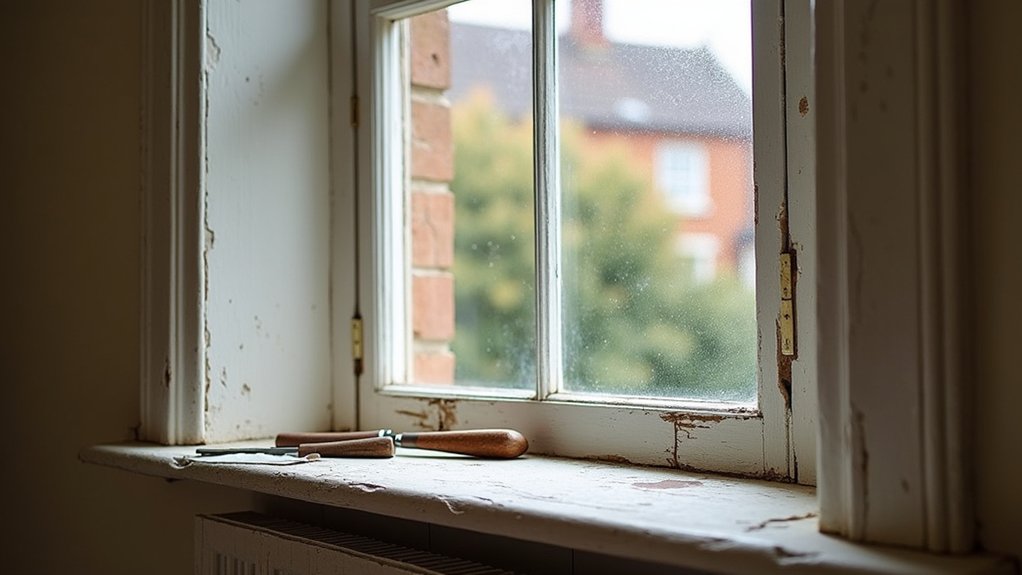
Costs and lifespan matter, but planning rules often decide what you’re actually allowed to do to timber sash windows on a period property. If you’re in a conservation area or listed building, you’ll usually need consent for changes to glazing bars, horn profiles, putty lines, or the timber species.
Aim for Historical accuracy: repair spliced sills, keep original joinery, and match glass thickness and reflections where required. Before you order replacements, check whether like-for-like repair qualifies as permitted development.
Take photos, measure sections, and ask the officer early—cheaper than redoing work. For draughty rooms, consider brush seals and secondary glazing; they’re reversible and often approved.
You’ll also cut the Environmental impact by retaining frames and reducing waste on site.
Frequently Asked Questions
How Long Does a Typical Sash Window Restoration Project Take?
A typical sash window restoration takes 1–3 days per window, or 1–2 weeks for a full house. You’ll spend longer if you prioritize historical accuracy and careful material selection to control weather exposure and budget.
Can I Restore Sash Windows During Winter Without Causing Interior Drafts?
Yes, you can restore them in winter without drafts—tuck your home under a warm blanket. Use winter sealing and draft prevention: temporary films, foam, and brush strips. Work window-by-window, keep tools ready, costs low.
What Maintenance Schedule Keeps Restored Timber Sash Windows in Best Condition?
You’ll keep restored timber sash windows best by doing seasonal checks: spring and fall. Monthly, do glass cleaning. Twice yearly, do hardware maintenance, clear tracks, and touch up paint. Yearly, inspect putty, cords, and seals.
Do Restored Sash Windows Improve Soundproofing Compared With Original Condition?
Yes, you’ll usually get Soundproofing improvements after restoration; it’s like pitching a tighter tent in wind. You’ll seal gaps, renew cords, add discreet brush seals, and keep Historic accuracy, saving cash long-term.
Which Paint Types Work Best on Restored Timber Sash Window Frames?
You’ll get best results with exterior microporous satin/eggshell acrylic or oil-alkyd primers topped with flexible topcoat. They boost Paint durability, shed rain, and stay affordable. Choose low-VOC, Eco friendly finishes where possible, too.