
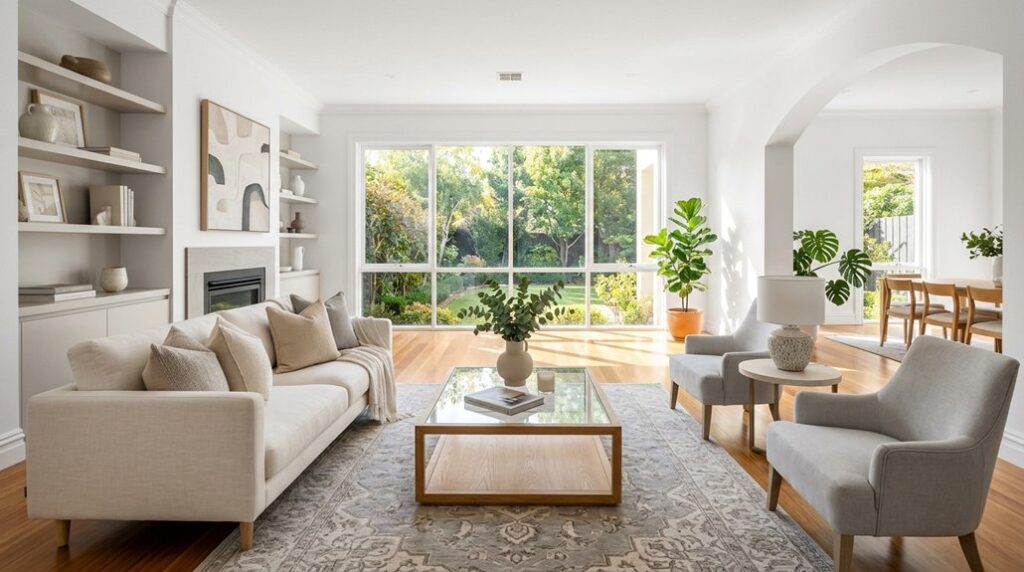

A perfectly prepared home can transform an ordinary valuation into a considerably stronger asking price. Start with a room-by-room property check, noting leaks, damaged surfaces, faulty fixtures, and maintenance issues that could concern an estate agent. Then declutter, deep-clean, neutralise odours, and improve kerb appeal by tidying gardens and exterior details. Finally, arrange furniture to maximise space and natural light while highlighting architectural features—because one overlooked detail could still undermine your preparation.
Key Takeaways
- Complete repairs, resolve damp, service the boiler, and gather relevant guarantees, certificates, and planning documents.
- Declutter thoroughly, organize storage, and deep-clean every room to make the property feel spacious and well maintained.
- Improve kerb appeal by cleaning paths, windows, doors, gardens, fences, gates, and exterior lighting.
- Highlight architectural features, flexible rooms, storage capacity, natural light, and attractive outdoor spaces.
- Prepare accurate room measurements, utility costs, lease details, and evidence of comparable local sold prices.
Start With a Pre-Valuation Property Check
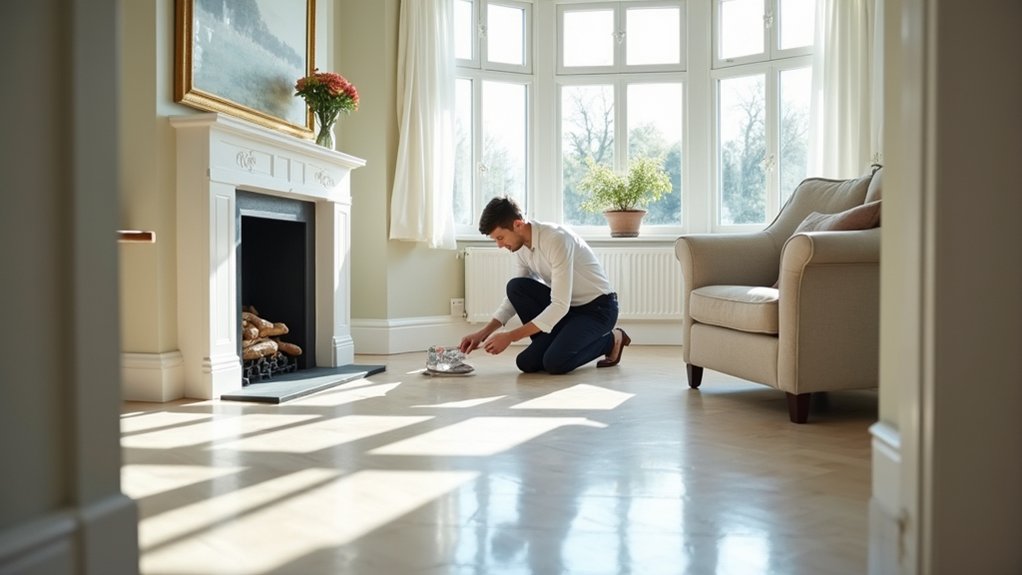
Before the estate agent arrives, inspect the property as though you’re evaluating it for a buyer. Record each room’s dimensions, orientation, storage capacity, and functional features. Test taps, toilets, lights, sockets, heating controls, windows, locks, and appliances. Then note defects that could affect perceived value.
Check the roofline, gutters, exterior masonry, paths, fencing, and drainage from ground level. Gather guarantees, planning permissions, building-control certificates, lease details, and recent utility costs.
Compare nearby sold prices, not just asking prices, and review current market trends for your property type. Identify valuation misconceptions, such as assuming expensive improvements recover their full cost or treating online estimates as definitive.
Don’t alter presentation yet; create an objective defect-and-evidence list, so the agent can assess condition accurately and explain how each issue may influence pricing.
Declutter and Deep-Clean Every Room
Start with a systematic decluttering pass, removing excess furniture, personal items, paperwork, ornaments, and stored belongings from every room. Use labelled boxes for items you’ll donate, store, or discard, then clear cupboards, wardrobes, and shelves so viewers can assess capacity.
Review each furniture arrangement: preserve clear walkways, expose floor area, and position seating to make rooms feel usable rather than crowded.
Apply consistent color coordination by limiting competing patterns and grouping accessories in restrained tones.
Next, deep-clean methodically from ceiling to floor. Dust light fittings, skirting boards, vents, door frames, and window tracks; wash glass, mop hard flooring, and shampoo carpets where necessary.
Degrease kitchen surfaces, clean appliance interiors, sanitise bathrooms, and remove limescale.
Improve ventilation before inspection, and neutralise odours rather than masking them with heavy fragrances.
Complete Repairs That Protect Your Valuation
Once the house is clean and orderly, address defects that could undermine an agent’s valuation or give buyers negotiating leverage. Fix leaking taps, dripping radiators, loose handles, sticking doors, cracked tiles, damaged flooring, and failed sealant. Replace blown window units, repair faulty locks, and test every light, socket, extractor fan, smoke alarm, and appliance included in the sale.
Resolve damp promptly by identifying its source rather than masking stains with paint. Service the boiler, retain certificates, and organise invoices for recent work; documented maintenance reassures the agent.
Repaint scuffed walls in neutral tones, but don’t conceal structural movement or mould. Apply practical staging techniques only after repairs, so furniture doesn’t hide defects.
Likewise, postpone landscaping ideas until this checklist is complete, keeping attention on the property’s condition rather than its presentation.
Improve Kerb Appeal Before the Estate Agent Arrives
Improve the approach to your home before the estate agent arrives, focusing on clean, well-maintained features rather than costly upgrades. Sweep paths, pressure-wash paving, and remove weeds from joints and borders.
Trim hedges evenly, prune overgrown branches, and mow the lawn with crisp edges. Simple garden landscaping, such as refreshed mulch, orderly planting, and weed-free beds, creates a cared-for entrance without major expense.
Clean the front door, polish hardware, and touch up chipped paint in a matching colour. Wash windows, frames, and exterior lights, replacing failed bulbs so the entrance looks safe and functional.
Clear bins, hoses, toys, and seasonal clutter from view. Check fences, gates, and house numbers for damage, secure loose fittings, and ensure the gate opens smoothly.
These details strengthen curbside appeal immediately.
Present Your Home’s Best Features Clearly

Present the features that add the most value by making each room’s purpose and strongest selling point immediately clear. Use practical staging techniques to remove distractions, balance furniture, and preserve clear walkways. Position key features so an agent can assess them without rearranging anything.
- Showcase original fireplaces, period mouldings, or exposed beams with unobstructed sightlines.
- Define flexible spaces as offices, playrooms, or guest bedrooms using appropriately sized furniture.
- Emphasise storage by opening fitted wardrobes, clearing cupboards, and organising utility areas.
- Apply lighting enhancements, including clean lampshades, daylight-balanced bulbs, and open curtains.
Repair minor defects around feature areas, such as loose handles, scuffed flooring, or stained grout.
Clean windows to maximise natural light, and use mirrors carefully to increase perceived space.
Keep décor neutral, but retain distinctive architectural details that support your asking price.
Guarantee outdoor features remain visible through clean doors and unobstructed windows.
Frequently Asked Questions
How Long Does an Estate Agent Valuation Appointment Usually Take?
You’ll usually spend 30–60 minutes during an estate agent valuation. You’ll discuss recent sales, property condition, improvements, and pricing. Prepare notes on property staging and curb appeal to support your asking price.
Should I Obtain Valuations From Multiple Estate Agents?
Yes—get two or three valuations: more eyes, better insight. Compare each agent’s evidence, fees, marketing plan, and Market trends analysis. Ask how Property staging could influence your recommended asking price and buyer appeal.
Is a Valuation Different From a Formal Property Survey?
Yes, a valuation estimates market value using property comparison and local evidence. A formal survey examines construction, defects, and condition. You’ll need valuation accuracy for pricing, but a survey protects you by identifying costly issues.
What Documents Should I Prepare for the Estate Agent?
Prepare your title documents, planning permissions, building-regulation certificates, guarantees, utility bills, council-tax statement, and recent renovation invoices. Include a fixtures list. Although home staging and curb appeal help presentation, accurate paperwork supports valuation confidence.
Can I Request a Valuation if I’M Not Ready to Sell?
Yes, you can request a valuation before you’re ready to sell; it’s a useful snapshot. Ask about property staging, comparable sales, fees, and market timing, then use the advice privately to plan confidently.
Conclusion
By checking, cleaning, correcting, and carefully curating your home, you’ll give the estate agent a clear, confident impression of its value. Fresh finishes, functional fixtures, spotless surfaces, and tidy planting create a polished property picture, while uncluttered rooms and well-positioned furniture showcase space, light, and character. Before the valuation, complete your final walk-through, resolve minor defects, ventilate each room, and switch on every working light. These practical preparations can strengthen your presentation and support a higher asking price.