


Like a modern-day treasure map, the MLS often hides value in plain sight if you know what to flag. You watch for stale days-on-market, repeated price cuts, and vague “updated” notes that usually mean cosmetic fixes, not systems. You run quick comps, sanity-check achievable rent, and pencil a rehab budget with a stress test for rates and vacancy. Then you scan for nearby permits, transit upgrades, and new retail—because the next step decides whether you’ve found margin or a trap…
Key Takeaways
- Scan for listing red flags: high DOM, repeated price cuts, poor photos, or vague “TLC” notes that suppress competition.
- Validate value fast: estimate ARV from recent comps, haircut 3–5%, then subtract repairs, closing, and financing costs.
- Use a quick max-offer rule: ARV × 0.70 minus repairs; only pursue deals that keep a clear margin.
- Stress-test income: confirm nearby rent comps and ensure DSCR ≥ 1.2 after 35% expense load and vacancy.
- Track neighborhood catalysts: new transit, infrastructure, and amenities often trigger price catch-up within 12–24 months of completion.
What an Undervalued Investment Property Is (Comps + Rent)

Although an undervalued investment property can look “fine” at first glance, the real signal shows up in the numbers: it’s priced below what comparable homes (recent, nearby sales with similar size/condition) justify *and* it can support market rent that makes the deal pencil out.
You validate “below comps” by adjusting for square footage, bed/bath count, lot, and finish level, then backing out a realistic renovation budget tied to contractor bids.
You validate “supports rent” by benchmarking leases, not asking rents, and stress-testing vacancy, taxes, insurance, and maintenance.
In down Market cycles, Investor psychology creates discounts when sellers fear time-on-market; you exploit that by modeling post-renovation value and stabilized cash flow, not hope.
Listing Red Flags That Signal Undervalued Pricing
When you scan a listing, the best undervaluation clues often look like “problems” the average buyer won’t price correctly—bad photos, sparse details, and obvious cosmetic wear—so the home sits longer and the seller gets flexible.
Watch for DOM climbing above neighborhood medians, frequent price edits, and “motivated” language after a fallen contract.
Flag properties described with vague renovation terms (“needs TLC”) but showing intact systems—newer roof, updated panel, solid foundation notes.
Poor staging, dated finishes, and clutter signal value you can access with paint, lighting, floors, and kitchens.
Also track miscategorized properties: luxury listings with amateur marketing, or celebrity homes priced awkwardly due to privacy limits and restricted showing windows.
Those friction points reduce bidder competition.
Fast Deal Math to Confirm It’s Undervalued
You don’t need a full spreadsheet to confirm an undervalued deal—you need fast math that ties price, rehab scope, and local comps to a realistic ARV.
Run a back-of-napkin valuation by subtracting your renovation budget and margin from the after-repair comp value to see if the ask price leaves enough spread.
Then sanity-check cash flow with rapid rent-rule checks (market rent per bed, rent-to-price, and rent vs. taxes/insurance) so you’re not buying a “cheap” property that can’t carry itself.
Back-Of-Napkin Valuation
Before you schedule a contractor or pull full comps, run a back-of-napkin valuation to verify the deal pencils in under five minutes.
Start with a conservative ARV from the nearest recent sale you already know, then haircut it 3–5% for market timing risk.
Next, estimate rehab using rough unit costs: paint/flooring $6–$10/sf, kitchens $8k–$20k, baths $4k–$12k, roof $8k–$18k, plus 10% contingency.
Add closing, holding, and financing points, then back into your max offer: ARV × 0.70 − repairs − costs.
If the spread still clears your target margin, you’re looking at mispricing, not wishful thinking—ignore investment psychology hype and stay numbers-first.
Rapid Rent-Rule Checks
Although comps tell you what a property *sold* for, rent rules tell you what it can *earn*—and you can run them in 60 seconds to confirm whether the price is truly discounted or the rehab scope is hiding a cash-flow problem.
Pull current rent comps within 0.5 miles, then stress-test: can it hit the 1% rule (monthly rent ≈ 1% of all-in cost) or at least 0.8% in pricey metros?
Next, run a quick DSCR check: rent minus 35% expenses should cover the proposed P&I by 1.2x.
If you’re renovating, add $150–$250/month rent lift per “value room” (kitchen, baths, HVAC), but discount for lease-up time.
Use this for Market timing and investment diversification decisions.
Neighborhood Signals That Prices Will Catch Up
You’ll see prices catch up when transit and infrastructure upgrades move from proposals to funded timelines—track new stations, road work, and utility improvements, then compare nearby sale comps before and after similar projects.
You should also watch for new businesses and amenities (grocers, gyms, coffee shops) because they tighten rental demand and justify higher renovated-after rents.
If you can rehab to the neighborhood’s emerging finish level while those catalysts roll out, you’re positioned to capture the spread as the market re-rates.
Transit And Infrastructure Upgrades
Where do price gaps close fastest? Around new public transit and infrastructure projects that cut commute times and lower perceived risk. Track funded plans, not headlines: read capital-improvement budgets, bid awards, and construction timelines.
If a station upgrade or bus-rapid-transit line opens within 12–24 months, you can underwrite higher rent and resale comps sooner.
Map a 0.5–1.0 mile radius and compare $/sq ft to similar blocks already served by rail. Then target properties where renovations align with incoming demand: add durable finishes, laundry, storage, and efficient HVAC to reduce vacancies and justify premiums.
Watch for street, sewer, and lighting replacements too—those signal long-term municipal commitment and fewer surprise repairs for you.
New Businesses And Amenities
How can you tell a neighborhood’s pricing hasn’t caught up yet? Track the first wave of new businesses: specialty grocers, fitness studios, daycare, and coffee shops signing 5–10 year leases. Those operators underwrite foot traffic and household income growth before sale comps reflect it. Pull permits and tenant announcements, then compare them to local market trends like rent growth, vacancy compression, and days-on-market shifts.
Next, map amenities within a 10-minute walk: parks upgrades, medical clinics, co-working, and restaurants. If they’re arriving while housing stock stays dated, you’ve got a renovation edge. Budget for kitchens, baths, and curb appeal that match the incoming customer base.
Strong property management lets you capture higher rents fast, reduce turnover, and stabilize NOI before cap rates tighten.
Hidden Deal-Killers: Repairs, Tenants, Title, Zoning
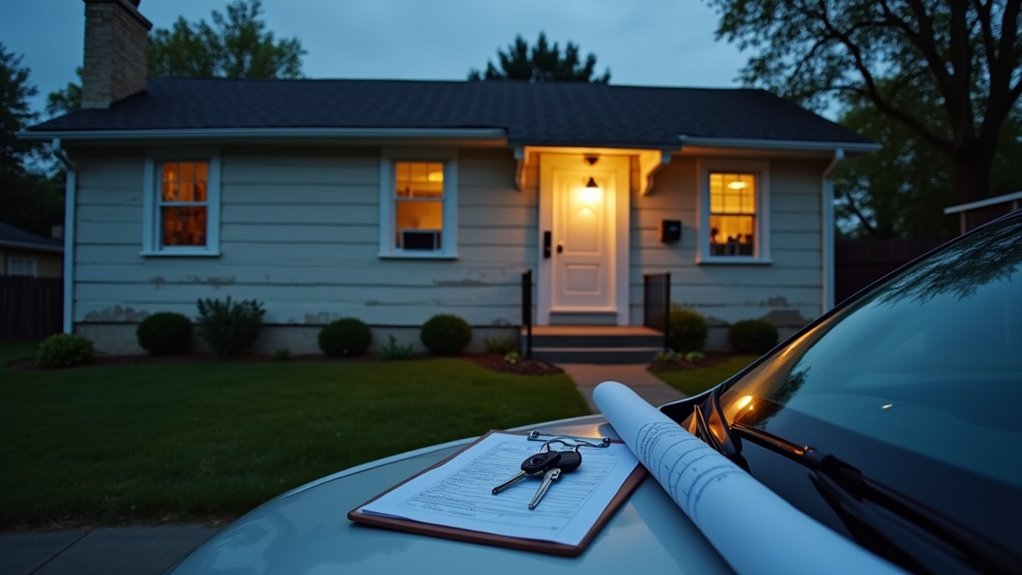
Even if the asking price looks like a steal on paper, hidden deal-killers can erase your margin fast—unbudgeted repairs, problem tenants, title defects, and zoning or permit constraints.
Verify rehab with a scope: roof age, HVAC SEER, sewer line, foundation movement, and electrical service size; price each with local $/sq ft comps and contractor bids, not guesses.
Audit tenants like assets: pull rent rolls, ledgers, deposits, and lease terms; check delinquency, voucher compliance, and eviction history to protect cash flow.
Run a thorough title search for liens, easements, boundary gaps, and HOA covenants; title issues can block financing or resale.
Confirm zoning, setbacks, parking minimums, and permit history; illegal units can collapse NOI and valuation overnight.
How to Act Fast and Win Without Overpaying
Because good value gets bid up fast, you’ve got to move like a pro: pre-underwrite the deal with a repair-backed max offer (ARV × target % minus line-item rehab, closing, and financing costs).
Line up proof of funds and a lender who can close on your timeline, and submit clean terms that reduce seller risk without inflating price.
Walk the property with a contractor, price scope by trade, and add a 10–15% contingency for unknowns.
Use comps adjusted for condition, not wishful retail listings.
Leverage Market timing: bid hardest when DOM is rising or rate shocks cool demand.
Exploit investor psychology: sellers prefer certainty, so offer a fast inspection, limited asks, and an escalation cap tied to verified repair credits.
Walk away if margins compress.
Frequently Asked Questions
Should I Form an LLC Before Buying My First Investment Property?
Yes, you should often form an LLC first for Legal structure and Asset protection, especially if you’ll renovate. Compare lender terms, insurance quotes, and local liability stats; you’ll price risk better and move faster.
How Do I Finance an Undervalued Property With Limited Cash Reserves?
You’ll finance it like a thrift-store magician: use Creative financing—seller carry, hard money, private notes—backed by Market analysis comps. You’ll budget reno line-items, target 70% ARV minus repairs, and refinance fast post-rehab.
What Insurance Coverage Is Essential for a Newly Purchased Rental Property?
You’ll need landlord insurance (dwelling, liability, loss-of-rents), plus flood/earthquake if maps justify it, and builder’s risk during renovations. Use a property inspection to flag hazards, then compare multiple insurance quotes to protect cashflow.
How Are Property Taxes Reassessed After Purchase, and How Soon Do They Rise?
Expect Tax reassessment at closing or the next assessment cycle; you’ll often see a Property tax increase within 6–18 months. You raise value, you trigger hikes, you track comps, you budget renovations accordingly.
What Records Should I Keep for Depreciation and Other Rental Tax Deductions?
Keep purchase closing statement, Property valuation/appraisal, depreciation schedule, land/building allocation, and all Tax documentation: invoices, receipts, contracts, permits, mileage logs, and rent rolls. Track renovation costs separately as capital improvements versus repairs, with dates/photos.