
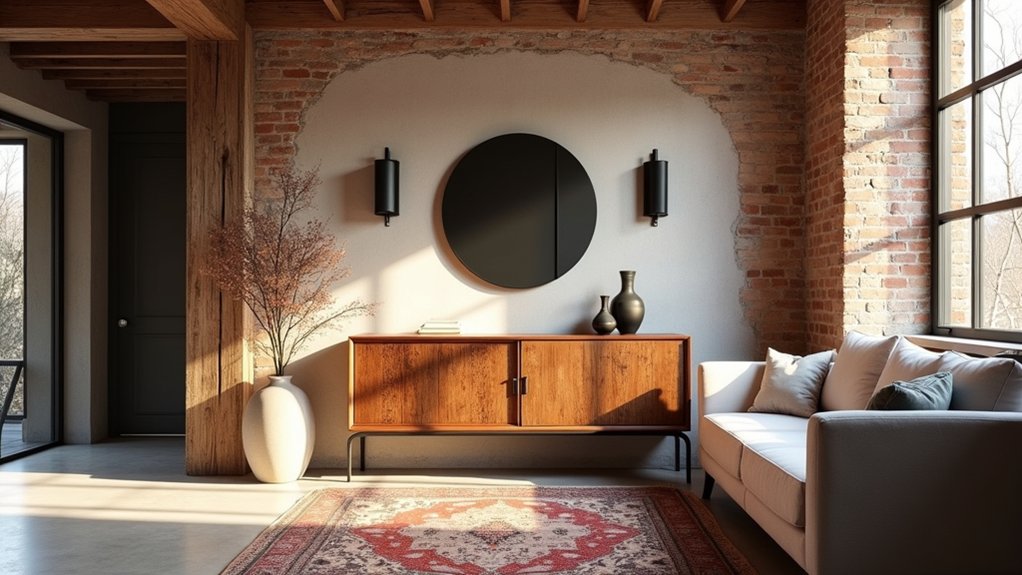

You can’t keep the soul of an old home by sanding it flat. If you want a space that feels authentic and works hard every day, you’ll need to decide where antiques lead and where modern upgrades quietly follow. Start by protecting high-value originals—floors, moldings, windows—then layer in lighting, appliances, and systems that improve comfort without announcing themselves. The payoff is real, but only if you avoid a few common missteps…
Key Takeaways
- Use a 70/30 visual-weight split: invest in fixed elements, and refresh the rest with lighting, textiles, art, and standout furniture.
- Choose one dominant era and one accent style, repeating two or three finishes or materials to prevent a scattered, overmixed look.
- Preserve original character first—hardwood floors, doors, trim, fireplaces, and windows—using gentle restoration to protect authenticity and resale value.
- Integrate modern upgrades discreetly: grounded outlets, hidden HVAC, smart controls, and layered LED lighting that highlights antique details without visual disruption.
- Control cohesion with a tight palette: one patina-friendly neutral, two supporting hues, and bold accents limited to 5–10% of the room.
Set Your Antique‑Modern Mix: The 70/30 Rule
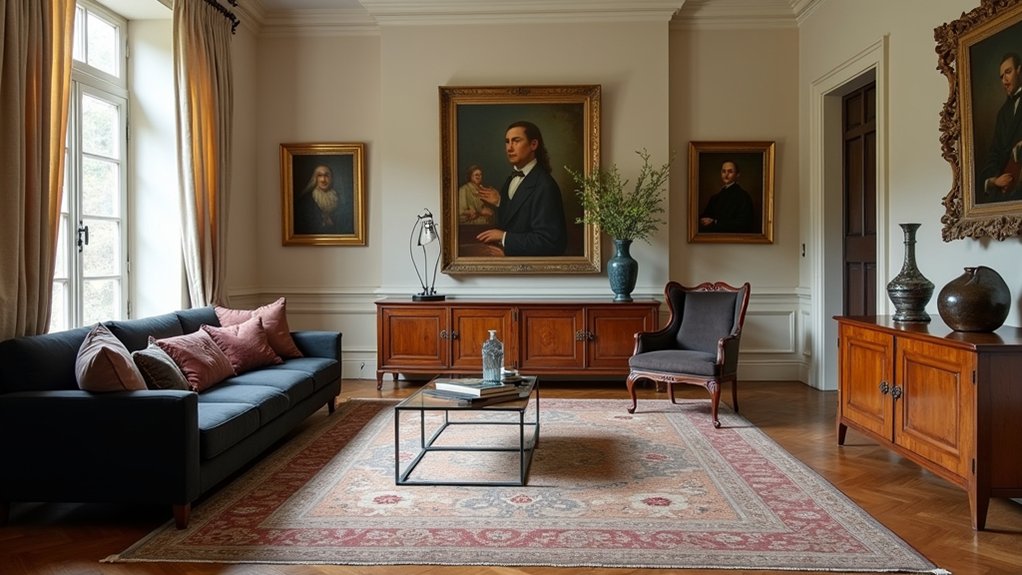
If you want an antique‑modern interior that feels intentional (and holds its value), start by setting a clear ratio: aim for roughly 70% of the room’s visual weight in one style and 30% as the accent.
Choose the 70% based on fixed costs: flooring, wall color, and the largest case goods. That anchors resale logic, because buyers read these as “the home’s baseline.” Then spend the 30% on switchable, higher-ROI pieces: lighting, textiles, art, and a single standout chair or mirror.
Track “visual weight” by scale, contrast, and sheen—dark wood counts more than pale oak; brass pops more than matte black. Keep your palette tight so Vintage charm doesn’t fight Contemporary elegance; it should read curated, not chaotic.
Keep These Antique Features (And Restore Them Right)
While modern upgrades can boost comfort, the antiques that consistently return value are the ones buyers can’t easily replicate: original hardwood floors, solid-wood doors and their hardware, plaster or detailed trim work, fireplaces/mantels, and old windows with quality muntins. Prioritize these first, because you’ll protect appraisal comps and shorten days on market.
Use Antique restoration that preserves material, not replaces it. For floors, refinish with gentle sanding, stain matching, and durable topcoats; avoid aggressive drum cuts that thin boards.
For doors and trim, strip paint with low-heat or chemical methods, repair dents with Dutchman patches, and keep period hinges and knobs.
For plaster, stabilize cracks with washers, re-key, and lime-based patching.
For windows, re-glaze, weatherstrip, and tune pulleys—smart Restoration techniques that pay back.
Add Modern Upgrades Without Losing Character
Because today’s buyers expect comfort as a baseline, you’ll get the best ROI from modern upgrades that disappear into the home’s original bones instead of competing with them. Prioritize systems first: rewire with period-appropriate plates, add grounded outlets in baseboards, and run new HVAC through closets or soffits to protect plaster and millwork.
Upgrade insulation and air-sealing from attic and crawlspace so you keep trim, floors, and Vintage charm intact.
In kitchens and baths, choose contemporary updates that respect original proportions: inset cabinetry, integrated appliances, and quiet ventilation ducted outside. Use low-profile LED in existing fixtures, and add smart thermostats with minimal wall footprint.
Document work, pull permits, and keep before/after photos—buyers pay more for invisible quality and verified performance.
Choose a Color Palette That Unifies Old and New
Once you’ve handled the “invisible” upgrades—wiring, HVAC, insulation—the fastest, lowest-risk way to make old and new feel intentional is a disciplined color palette. Start with one neutral that flatters existing patina (warm white, greige, or muted stone), then repeat it across walls, trim, and major textiles for dependable Color harmony.
Next, add two supporting hues pulled from original materials—brick undertones, aged oak, or tile veining—so historic elements read as curated, not accidental. Limit bold accents to 5–10% of the room to control spend and avoid repaint cycles.
Use palette contrast strategically: pair matte, heritage-leaning paints with a single crisp modern tone (charcoal, inky blue, blackened bronze) for clean edges. Always test swatches in morning and evening light before committing.
Mix Antique and Modern Furniture (Anchor, Then Edit)
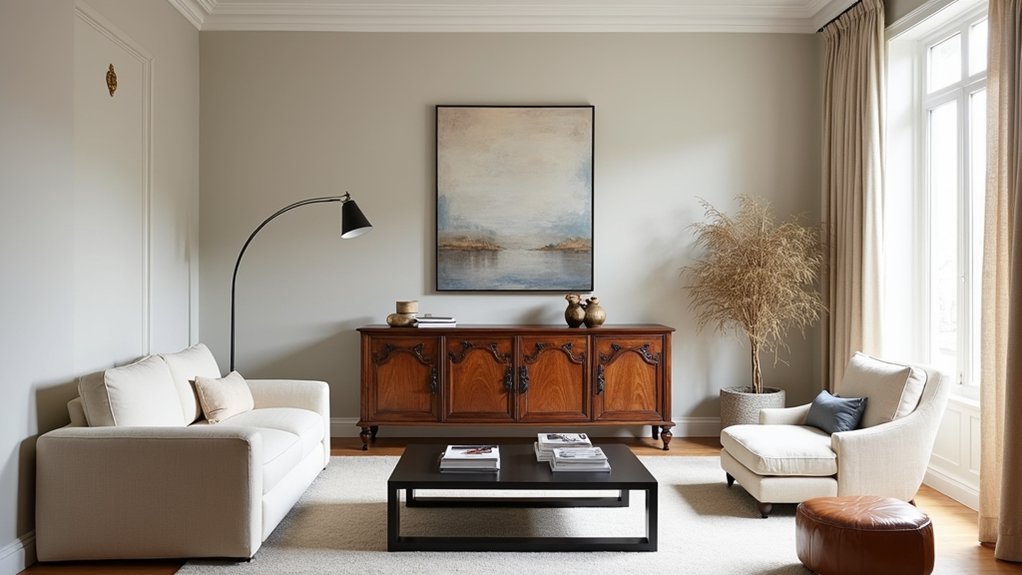
After you’ve locked in your palette, pick one “anchor” piece—often a substantial antique like a dining table, armoire, or sofa—and let it set the scale and patina for the room. Measure it, map clearances, and choose modern companions that match its proportions, not its era.
Then edit hard: limit competing antiques to one or two supporting items, and keep the rest clean-lined so the anchor reads intentional, not cluttered. Use repetition to raise ROI—echo the antique’s wood tone in one side table, then add contrast with a low-profile sectional or slim metal chairs.
Finish with targeted vintage accessories for texture (one tray, one mirror), and hang contemporary art to bridge timelines and keep the look current without chasing trends.
Update Lighting to Highlight Antique Details
While your antique pieces bring built-in character, updated lighting is what makes their carving, inlay, and patina read as intentional value instead of visual noise. Start by layering: ambient for overall clarity, task for usability, and accent to “sell” details.
Use 2700K–3000K LEDs to keep wood tones warm, and aim for high CRI (90+) so gilt, marquetry, and textiles don’t look flat. Add dimmers to control glare on polished finishes and to shift mood without swapping fixtures.
Position picture lights or adjustable spots at 30 degrees to rake across relief and reveal depth. Blend innovative lighting with selective vintage illumination—refurbished sconces with new drivers, or period-style shades on modern lamps—so you improve performance while keeping authenticity.
Combine Modern Materials With Aged Finishes
You’ll get faster, more durable upgrades when you pair modern materials like steel, glass, or engineered wood with aged finishes that carry patina appeal.
Specify layered finishes—matte lacquer over rubbed bronze, sealed limewash on plaster, or a toned stain on new millwork—so wear looks intentional and maintenance stays low.
Keep the contrast cohesive by repeating one or two antique cues (warm metal, softened edges, muted tones) across the modern pieces, so the room reads curated, not patched together.
Modern Materials, Patina Appeal
Even if you’re starting with sleek, modern materials like quartz, stainless steel, or large-format porcelain, you can layer in patina to keep the space from feeling sterile and to protect long-term resale appeal. Specify hardware with aged brass or oil-rubbed bronze, and choose a honed or leathered stone finish to reduce glare and hide micro-scratches—lowering upkeep and replacement risk.
Add industrial textures through blackened steel brackets, wire-mesh inserts, or concrete-look tile, but keep forms clean to support minimalist aesthetics. Use reclaimed wood for open shelving or a vanity front, sealed with matte hardwax oil for durability.
Finally, add one vintage element buyers recognize—an antique mirror or factory pendant—so the upgrade reads intentional, not trendy. This also improves appraisal narratives.
Layered Finishes, Cohesive Contrast
How do you keep crisp quartz, stainless, or porcelain from reading cold and disposable? You pair them with aged finishes that signal permanence. Specify a honed stone top, then add a reclaimed-oak edge profile or a waxed walnut island panel.
Choose unlacquered brass hardware that’ll darken naturally, or blackened steel brackets with visible fasteners. These layered textures add depth without sacrificing wipe-clean performance, so you protect resale value and daily usability.
Control contrast with repeatable cues. Pull one warm tone from your antiques—amber shellac, oxidized bronze, or worn leather—and echo it in two to three cohesive accents: faucet, lighting, and frame finishes.
Keep modern planes simple, let patina live on touchpoints, and you’ll get durable style that doesn’t date fast.
Avoid These Antique‑Modern Decorating Mistakes
If you overmix eras and styles, you’ll dilute the room’s story and waste money on pieces that compete instead of complement.
You’ll also lose value fast when scale and proportion are off—like pairing a delicate antique chair with an oversized modern sectional that swallows it.
Set a tight style edit and measure key dimensions before you buy so every antique and modern piece earns its footprint.
Overmixing Eras And Styles
While mixing antiques with modern pieces can add instant depth, overmixing eras and styles usually makes a room feel scattered and harder to use. When every item competes for attention, you lose a clear focal point and the space stops supporting daily routines.
Protect your budget and resale value by setting a tight style brief. Choose one dominant era and one supporting accent, then repeat two or three finishes, colors, or materials to lock in style harmony.
Use Vintage contrast deliberately: pair a single ornate antique with clean-lined upholstery, or a modern table with one patinated cabinet, not five. Edit impulse buys, and store “maybe” pieces offsite for 30 days. If you can’t explain how an item fits your brief, skip it.
Ignoring Scale And Proportion
Even with a tight style brief, the room can still feel “off” when antiques and modern pieces don’t share the same scale. A delicate Louis chair beside an oversized modular sofa reads like a staging error, not a curated contrast, and it wastes visual “real estate” you’ve paid for.
Lock in Scale harmony by measuring key masses: sofa length, table diameter, casework height, and lighting drop. Then enforce Proportion balance with clear ratios—pair heavy with heavy, light with light, and keep seat heights within a tight band so conversation zones feel intentional.
If an antique is petite, give it breathing room and a supporting mid-scale piece, not a giant neighbor. Before buying, mock layouts with tape or cardboard; you’ll prevent costly returns and avoid a room that looks mismatched in photos.
Frequently Asked Questions
How Do I Insure Valuable Antiques Used in Everyday Living Spaces?
Schedule a rider with your insurer, get professional appraisals using Valuation Techniques, and document condition pre-use. You’ll reduce premium disputes, protect ROI, and fund Antique Restoration after damage; update valuations annually, and secure storage.
Can I Mix Antiques and Modern Style in a Rental Without Permanent Changes?
Yes, you can mix antiques and modern style in a rental without permanent changes: use movable Decorative accessories, swap textiles, and add removable Wall treatments. You’ll boost resale-ready appeal, protect deposits, and minimize replacement costs.
What’s the Best Way to Document an Antique’s Provenance and Appraisal?
Trace its story like a steady breadcrumb trail: photograph every mark, collect receipts, export emails, and log Antique restoration work. For Provenance research, request expert letters and archival links; secure a dated, USPAP appraisal, updated.
How Do I Protect Antiques From Pets, Kids, and Heavy Daily Traffic?
Use barriers, rotate display pieces, and set “no-touch” zones to limit wear. Add rugs and corner guards, and apply pet proof finishes. Schedule Antique restoration checks, and store fragile items higher.
Where Should I Shop for Authentic Antiques and Avoid Reproductions?
Shop at reputable dealers, estate sales, Vintage markets, and Antique fairs where provenance and return policies protect your spend. Ask for documentation, inspect wear patterns, verify maker marks, and avoid “distressed” finishes. Pay by card, not cash.